

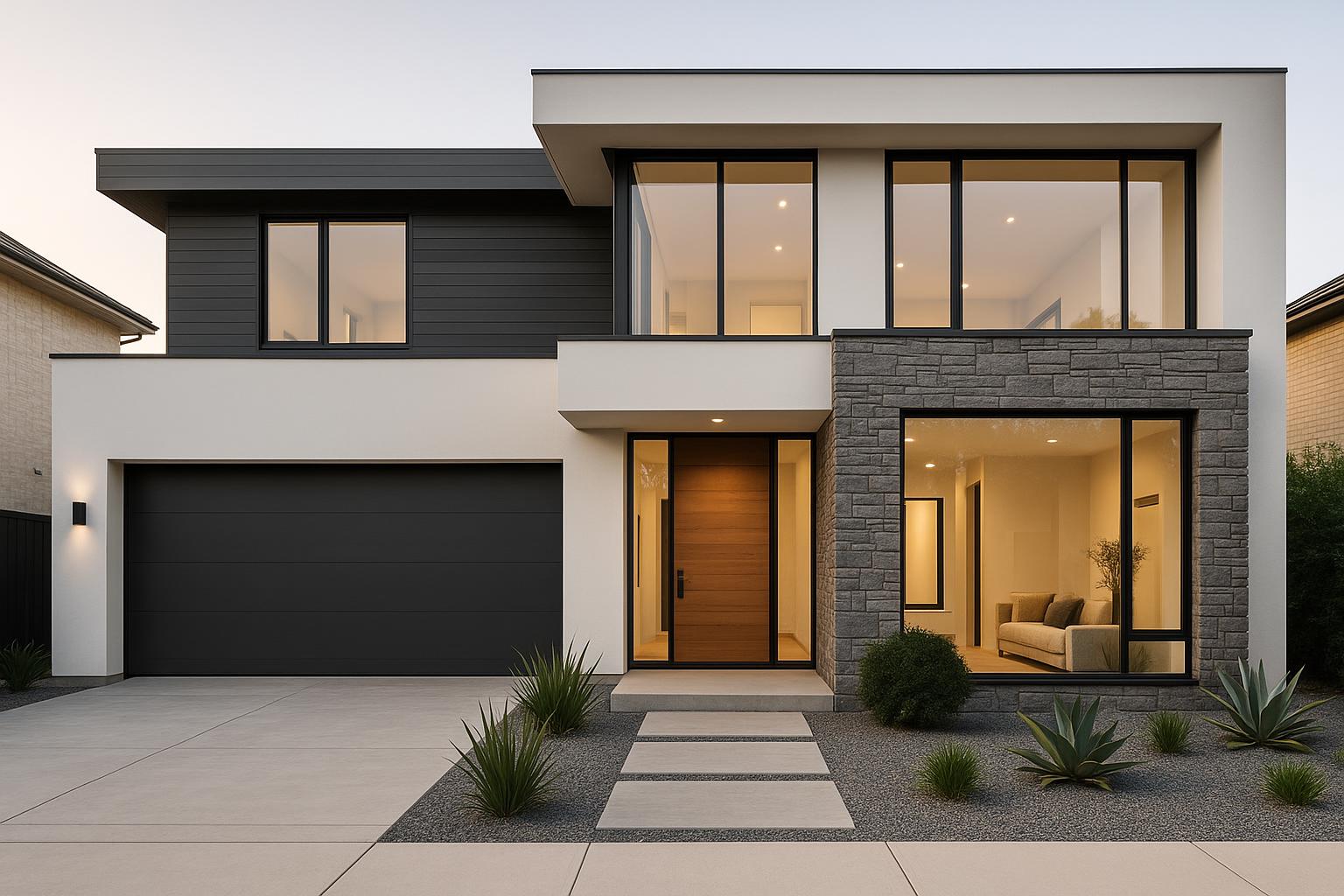
The facade of a home is a canvas reflecting the times we live in. Over the years, home exteriors have evolved, with modern aesthetics increasingly taking centre stage. Today, the exterior of a home is not just about shelter and security; it is a statement of personal style, environmental awareness, and technological advancement. This article delves into ten fundamental elements that define a modern home exterior, illustrating how contemporary designs have reshaped our concept of residential architecture. From minimalist aesthetics to smart technology integration, these elements collectively offer a glimpse into the future of home design.
For homeowners planning a broader exterior refresh, it is also worth thinking about how surfaces, boundaries and entrances work together. Durable materials, clear access points and carefully chosen finishes can improve kerb appeal while keeping maintenance manageable over the long term.
Emphasis on Minimalism
At the heart of modern exterior design lies minimalism – a design ethos that champions ‘less is more’. Minimalism in home exteriors is characterised by clutter-free, clean designs that focus on space, simplicity, and a monochromatic palette. The idea is to strip away the unnecessary, leaving a home that is elegant in its simplicity. Straight lines, flat roofs, and unadorned walls not only create a visually appealing façade but also embody a lifestyle that values functionality and unpretentious beauty. In an age of excess, the minimalist approach to exterior design is a breath of fresh air, bringing calmness and serenity to the forefront.
Eco-Friendly Elements
Eco-friendliness is no longer a mere trend; it is a vital aspect of modern home exteriors. Contemporary designs are increasingly embracing sustainable practices, focusing on the use of renewable resources, energy-efficient designs, and materials with a lower environmental impact. Features such as green roofs, solar panels, and the use of reclaimed wood or recycled materials are becoming commonplace. These eco-friendly elements not only reduce the carbon footprint but also enhance the home’s aesthetic value. By integrating nature and sustainability into design, modern exteriors are setting a precedent for responsible and conscious living.
Advantages of Composite Cladding
Composite cladding stands at the forefront of modern exterior innovation. This material is a composite of recycled wood and plastics, offering a futuristic solution to traditional cladding. Its advantages are multifaceted. Firstly, composite cladding is exceptionally durable and weather-resistant, capable of withstanding harsh elements without deteriorating in appearance or function. Secondly, its maintenance requirements are minimal, freeing homeowners from the constant upkeep associated with traditional materials. Thirdly, composite cladding comes in an array of textures and colours, allowing for a high degree of customisation to suit individual tastes and architectural styles. Additionally, its thermal efficiency contributes to better insulation, reducing energy costs. Finally, the environmental aspect of composite cladding cannot be overstated; it is a sustainable choice, reducing the reliance on virgin wood and contributing to a reduction in waste.
Glass Features and Transparency
Glass is a defining feature in modern home exteriors, embodying transparency and openness. Large glass panels, often stretching from floor to ceiling, allow natural light to flood interior spaces, creating a seamless transition between indoors and outdoors. This transparency fosters a connection with nature, blurring the lines between the built and natural environments. Glass features in modern homes are not just about aesthetics; they are also energy efficient, with advancements in double glazing and UV coating reducing energy consumption. The strategic use of glass in modern exteriors symbolises clarity and openness, both literally and metaphorically, in contemporary design.
Subtle Colour Schemes
Moving away from bold and bright, modern home exteriors often embrace subtle and neutral colour schemes. These palettes, predominantly consisting of whites, greys, and beiges, lend a sense of tranquillity and timeless elegance. The subtlety of these colours does not overwhelm the architectural design but rather complements and enhances it. Neutral exteriors also offer a versatile backdrop against which homeowners can highlight other design elements like landscaping or architectural details. This trend towards understated colour schemes in modern exterior design is not just a stylistic choice but a reflection of contemporary preferences for simplicity and sophistication.
Incorporating Nature
Modern home exteriors are increasingly designed to harmonise with nature, blurring the boundaries between indoor and outdoor spaces. This concept goes beyond just having a garden; it is about integrating natural elements into the very fabric of the building. The use of living walls, natural stone, and water features are common. Open terraces, patios, and large sliding doors enhance this connection, creating fluid spaces that encourage interaction with the natural environment. This design philosophy not only enriches the aesthetic appeal but also promotes a healthier living space, filled with natural light and fresh air, aligning with the human need to connect with nature.
Smart Home Exteriors
The modern home exterior is becoming increasingly intelligent, with technology playing a significant role. Smart home systems integrate into the very structure of the house, providing enhanced security, efficiency, and convenience. Features like automated gate systems, remote-controlled lighting, and advanced security cameras can now be seamlessly incorporated into the exterior design. These systems are often energy-efficient, contributing to a reduced environmental footprint. The incorporation of technology in home exteriors reflects the growing demand for homes that are not just aesthetically pleasing but also technologically adept, offering homeowners control and comfort at their fingertips.
Dynamic Lighting Solutions
In modern home exteriors, lighting is more than just a functional necessity, like traditional signage, it is an element of design that adds drama and character. Dynamic lighting solutions are pivotal in modern architecture, ranging from hidden LED strips that outline architectural features to sensor-activated lights that enhance security. These solutions offer both aesthetic appeal and energy efficiency. The ability to change lighting moods or intensities based on the time of day or occasion adds a dynamic layer to the home’s exterior. Smart lighting, which can be controlled remotely, further adds to the convenience, ensuring that the modern home is always seen in the best light.
Conclusion
Modern home exteriors represent a fusion of aesthetic elegance, environmental consciousness, and technological advancement. The ten key elements discussed here are not just trends; they are the cornerstones of contemporary design that make a home not just a living space, but a reflection of modern life itself. Bookmark this article and start that exterior design project this summer!
For commercial gardens, hospitality venues and larger outdoor projects, the finishing details can be just as important as the main structure. composite decking can provide a durable, low-maintenance surface for seating areas, paths, terraces and outdoor entertaining zones; while digital signage can help commercial venues share opening times, menus, promotions or visitor information clearly; while efficient hand dryers can support cleaner, lower-maintenance washroom facilities in public-facing outdoor settings.
