

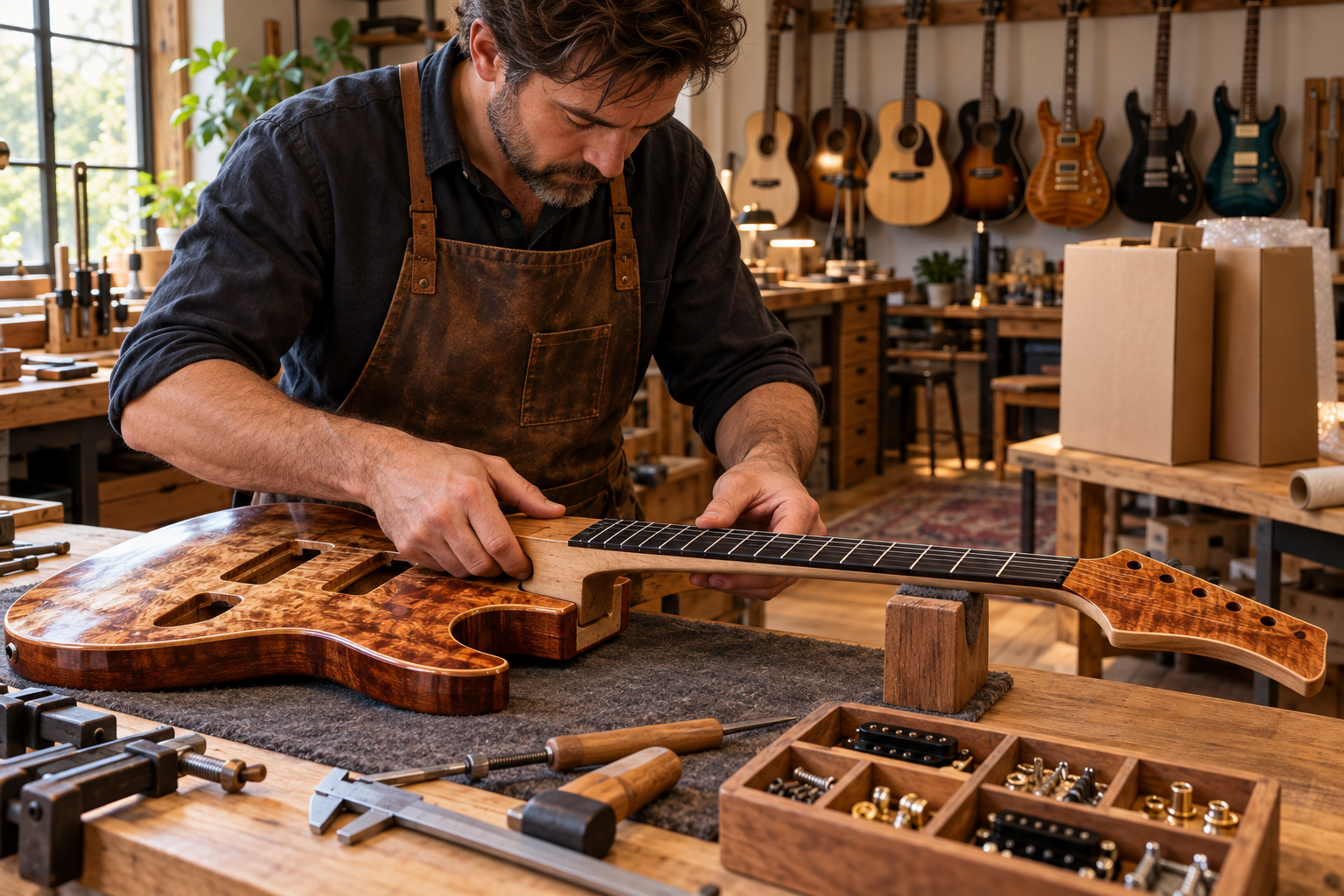
Building a guitar starts as a hands-on craft, but it can become a viable business for makers who understand where craftsmanship and commercial discipline meet. Customers considering a custom or small-batch instrument are buying more than wood, hardware and electronics. They are paying for material selection, construction decisions, customization and the expertise behind the finished instrument. For builders who want to move beyond occasional projects, the challenge is creating a repeatable process without stripping away the craftsmanship that makes a handmade guitar appealing in the first place.
Start With Better Materials
Material selection affects far more than the appearance of a finished guitar. Wood stability, moisture content, grain orientation, weight and consistency can influence how efficiently a builder works and how predictable the finished instrument becomes. Starting with properly prepared components can also reduce the amount of time spent correcting material problems before the more specialized work begins.
For builders increasing production, guitar body blanks can provide a practical foundation for custom instruments while preserving control over body shape, routing, contours, finishing and hardware choices. Quality blanks give builders prepared material from which to execute their own designs rather than forcing them to process rough lumber through every preliminary stage. That can reduce waste and preparation time while allowing more attention to go toward the details customers actually notice. A builder should still evaluate species, dimensions, grain, weight and moisture stability carefully, since consistency at the beginning can prevent expensive corrections later.
Standardize What Customers Don’t See
A custom business does not require every step to be reinvented for every instrument. Builders can standardize routine operations while preserving customization in areas that matter to the buyer. Templates for routing, neck profiles, pickup placement and control cavities can improve repeatability. Written specifications for scale length, fretwork, hardware installation and setup can serve the same purpose.
Standardization also makes pricing more accurate. A builder who knows approximately how many labor hours a particular body style, finish or electronics configuration requires can estimate costs with greater confidence. That information helps separate profitable customization from requests that consume disproportionate time. The goal is not mass production. It is eliminating unnecessary variation behind the scenes so that time can be spent on the features that justify custom pricing.
Build A Recognizable Product
Trying to build every possible type of guitar can make a young business harder to distinguish. A narrower product identity gives prospective customers a clearer reason to choose one builder over another. That identity might revolve around a distinctive body design, particular woods, vintage-inspired construction, modern ergonomics, extended-range instruments or a recognizable approach to finishes.
A defined product line also makes purchasing and production easier to manage. Builders can stock hardware they regularly use, develop reliable finishing schedules and refine construction methods through repetition. Custom options can then sit on top of a proven platform rather than turning every order into an entirely new engineering project. For buyers, that creates a useful balance: they receive an instrument with individual choices while benefiting from a design the builder already understands thoroughly.
Treat Craft As Expertise
The technical ability to assemble a playable instrument is only the starting point. Professional builders have to understand how numerous small decisions interact. Neck angle affects bridge geometry, fretwork influences action, nut dimensions affect tuning and playability, and finishing choices can alter both production time and repairability. Developing Luthier skills means learning to diagnose and solve problems rather than simply following a sequence of construction steps.
That expertise has business value because customers may arrive with preferences rather than technical specifications. A player might know that a neck feels uncomfortable without knowing whether the issue involves profile, width, radius, fret size or setup. A knowledgeable builder can translate that feedback into construction decisions. Continued practice, repair work, specialized training and careful evaluation of completed instruments can sharpen that judgment over time. Better diagnosis can also reduce callbacks and revisions, protecting both margins and reputation.
Price The Entire Process
One of the easiest ways to turn skilled work into an unprofitable business is to price an instrument according to materials alone. Wood, pickups, tuners, bridges and finishing supplies are visible costs, but they represent only part of what it takes to deliver a completed guitar. Labor, consumables, tool maintenance, shop expenses, packaging, payment fees, shipping materials and time spent communicating with customers all affect the actual margin.
Builders also need policies for deposits, design changes, completion estimates and cancellations before accepting custom orders. A request that changes halfway through construction can add hours of work or require replacement materials, so expectations should be established before cutting begins. Tracking the real cost and time associated with several builds provides better pricing information than guessing what customers might be willing to pay.
Turning guitar building into a business does not require sacrificing the personality of handmade work. It requires identifying where individual craftsmanship creates value and where consistency protects it. Builders who manage both sides have a stronger foundation for producing instruments people want while creating a business capable of supporting the work behind them.
