

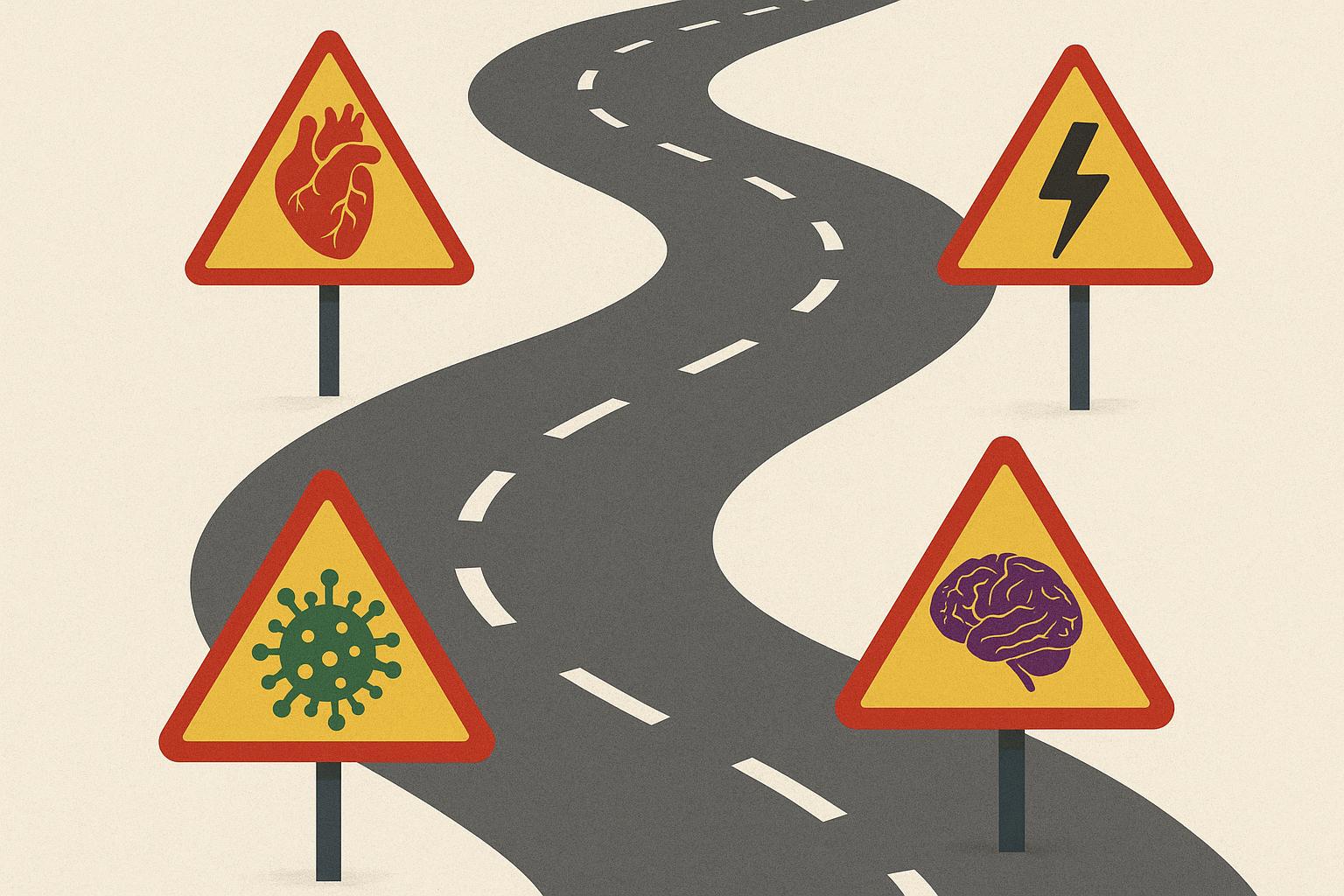
Most people think about health in separate boxes. Sleep goes in one box, stress goes in another, weight sits somewhere else, and mental health gets its own corner entirely. This way of thinking feels organized and easy to manage, so it makes sense why so many people default to it. The problem is that the human body does not actually work this way at all. A struggle in one area almost always spills into the next, whether a person notices it happening or not. By the time someone tries to fix just one box, the other boxes have often already been quietly affected too.
Take stress as an example. A stressful job rarely stays contained to the hours spent at a desk. It follows a person home, disrupts their sleep, changes their eating habits, and slowly chips away at their patience with family and friends. What started as a work problem quietly becomes a sleep problem, a weight problem, and a relationship problem all at once. By the time someone notices, it can feel like several unrelated issues appeared out of nowhere, when really they all trace back to the same root cause. Untangling that root cause is often far more useful than treating each symptom as its own separate battle.
This pattern shows up again and again across different stages of life. A teenager struggling with anxiety may also struggle with sleep, appetite, and school performance, since the brain and body are deeply connected systems rather than separate machines. An adult nearing fifty who ignores stress and poor sleep for years may suddenly face a serious medical scare that forces a complete lifestyle rethink. A busy entrepreneur who skips workouts and eats poorly to save time often finds that lost energy quietly drains their focus, mood, and decision-making at work. None of these problems stayed neatly in their own lane, and none of them were ever going to.
Understanding this connected nature of health is not just an interesting idea. It is one of the most useful shifts a person can make in how they approach their own wellbeing. Instead of chasing a single symptom or fixing one isolated habit, the smartest approach looks at the whole picture at once. The experts featured in this article each work with people at different life stages and through different challenges, yet they all describe the same underlying truth. Health problems rarely arrive alone, and solving them usually means looking beyond the obvious symptom sitting right in front of you.
When One Habit Quietly Affects Everything Else
Busy professionals often believe they can compartmentalize their health the same way they compartmentalize their calendar, treating sleep, nutrition, and stress as separate tasks to squeeze in when time allows. In reality, these areas constantly influence one another in ways that are easy to miss until something breaks down. Poor sleep affects appetite and focus. Poor nutrition affects energy and mood. Chronic stress affects nearly everything else at once, often without a person even realizing how connected the dots really are. A packed schedule makes this even harder to notice, since exhaustion can easily be mistaken for a personality trait rather than a warning sign.
Tobias Burkhardt, Founder of Paretofit, has spent years helping busy professionals see these connections clearly instead of chasing isolated fixes that rarely last.
“One client came to me sleeping five hours a night and blaming stress for his rising blood pressure and constant fatigue. We rebuilt his routine around three simple levers, sleep, protein, and short daily walks, nothing fancy at all. Within four months, his resting heart rate dropped and his energy at work noticeably improved. Health problems rarely stay in one lane, and small daily habits are often the fastest way to pull them back.”
His approach highlights something easy to overlook in a busy schedule. A person does not always need a complicated plan to see real change. Sometimes the most effective fix comes from identifying the few habits that quietly influence everything else, then adjusting those first instead of trying to fix every symptom separately.
What Happens When a Problem Finally Boils Over
Sometimes a person ignores the warning signs for years before a health issue forces its way into the spotlight. A stressful job, poor sleep, and constant tension can build quietly in the background for a long time without any single dramatic moment. Then, without much warning, that slow buildup can turn into a genuine medical emergency that changes everything at once. These moments are painful, but they often become the clearest possible proof of how connected health problems really are. Looking back, it usually becomes obvious that the warning signs were there all along, simply scattered across too many different areas of life to notice as one single pattern.
Richard Riviere, founder of Richard Riviere, experienced this firsthand when years of stress and poor health habits finally caught up with him in a frightening way.
“Two blood clots landed me in a hospital bed and forced me to see how one ignored problem had quietly spread into every part of my life. My stressful job had wrecked my sleep, my weight, and my mood long before it nearly wrecked my heart. I quit that job and spent years learning the real rules for health and money after fifty. Now I tell people every day that fixing one lane often means fixing your whole life at once.”
His story is a powerful reminder that health problems rarely arrive with a clear warning label attached. What looks like a single crisis is often the final result of many smaller issues that were never addressed. Waiting for a wake-up call is far more painful than paying attention to the early signs long before things reach a breaking point.
Why Treating the Whole Person Matters Most
This same pattern shows up clearly in adolescent mental health, where anxiety, sleep issues, and family stress rarely appear as isolated problems. A teenager struggling emotionally is often struggling physically as well, even if the physical symptoms seem unrelated at first glance. Effective treatment has to look at the full picture, not just the single symptom that first brought a family through the door.
Aja Chavez, National Executive Director of Mission Prep Healthcare, has seen firsthand how treating only one symptom at a time can leave the real problem untouched.
“We often see a teen come in for anxiety and quickly discover that sleep, nutrition, and family stress are all tangled up with it. One client's panic attacks eased significantly once we treated her insomnia and her home environment alongside her therapy sessions. Mental health never stays contained in a single symptom or a single session. Treating the whole person, not just the label on the intake form, is what actually creates lasting change.”
This whole-person approach reflects a lesson that applies far beyond adolescent treatment programs. Whether the issue is anxiety in a teenager, exhaustion in a busy professional, or a health scare in someone approaching fifty, the same principle holds true. Real healing rarely comes from treating a single symptom in isolation.
The Real Lesson Behind Every Connected Health Problem
The stories shared by these three experts, though very different in setting and audience, all circle back to the same central truth. Health problems do not stay politely inside their own lane, waiting to be addressed one at a time in a convenient order. They spread, overlap, and influence each other in ways that are easy to underestimate until real damage has already been done. Recognizing this pattern early gives anyone, whether a busy entrepreneur, a midlife professional, or a struggling teenager, a much better chance at lasting improvement. It also removes some of the shame that often comes with feeling like several things are falling apart at once, since those things were likely connected the whole time.
The most valuable takeaway from these experiences is not complicated, even if it is often ignored. Small habits, built consistently across sleep, movement, nutrition, and stress management, tend to produce far more meaningful results than chasing one isolated fix at a time. Waiting for a single dramatic wake-up call is far riskier and far more painful than paying attention to the quiet warning signs that show up months or even years earlier. A person who addresses these connections early gives themselves the best possible chance at feeling steady, resilient, and genuinely well.
In the end, health is never really made up of separate boxes, no matter how convenient that idea might seem. Sleep, stress, nutrition, and emotional wellbeing all move together, shaping one another every single day. The professionals featured in this article each arrived at this same understanding through very different paths, yet they all point toward the same lesson. Treating the whole person, rather than chasing one symptom at a time, is what ultimately creates health that lasts. That single shift in perspective, choosing to look at the whole picture instead of one narrow slice of it, may be the most powerful health decision anyone can make.
