

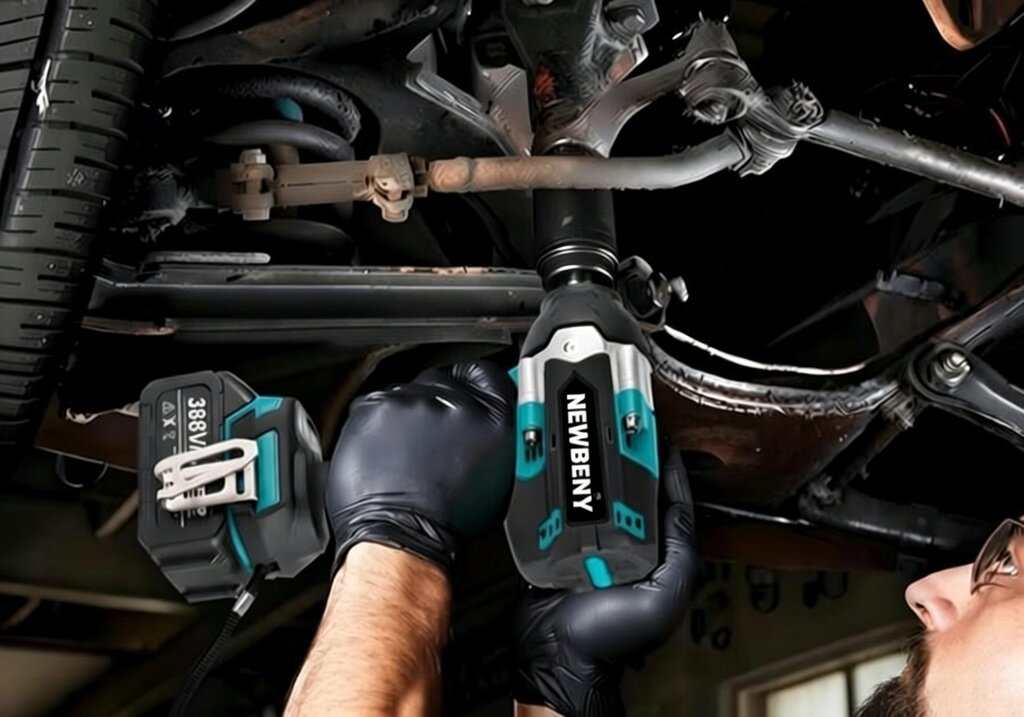
What Is an Impact Wrench?
An impact wrench is a power tool designed to deliver high torque output with minimal exertion by the user. Unlike a standard drill or ratchet wrench, an impact wrench uses a hammering mechanism that delivers rapid, rotational bursts of force. This makes it exceptionally effective for loosening stubborn, rusted, or over-torqued fasteners, as well as for driving large bolts and nuts with speed and precision.
If you’ve ever struggled with a lug nut that refused to budge or spent way too much time driving lag bolts by hand, you’ll immediately appreciate what an impact wrench brings to the table. Whether you’re a professional mechanic, a dedicated DIYer, or somewhere in between, understanding how to choose the right impact wrench can save you hours of frustration and significantly improve the quality of your work.
The impact wrench has become one of the most essential tools in automotive repair, heavy equipment maintenance, and construction. In recent years, cordless battery-powered models have revolutionized the industry, bringing professional-level torque to jobsites without the need for air compressors or power cords. This comprehensive buying guide will walk you through everything you need to know about choosing the right impact wrench for your specific needs.
How Does an Impact Wrench Work?
At the heart of every impact wrench is an ingenious mechanism that multiplies torque through rapid, repetitive impacts. When you pull the trigger, the motor spins a weighted hammer mechanism. As the hammer rotates, it builds up momentum and then strikes an anvil connected to the socket. This impact delivers a brief but powerful burst of rotational force, far exceeding what the motor could produce through continuous rotation alone.
Here’s the key advantage: because the impacts are delivered in short bursts, the reaction force is not transferred back to your hand and arm. This means you can apply hundreds or even thousands of foot-pounds of torque without the wrist-straining fight you’d experience with a breaker bar. The tool does the heavy lifting, allowing you to work faster and with less fatigue.
The impact mechanism typically delivers between 1,000 to 3,500 impacts per minute (IPM), depending on the model and power source. Each impact might last only a few milliseconds, but the cumulative effect is powerful enough to break loose fasteners that have been rusted in place for decades or drive large bolts into dense materials with ease.
Different types of impact wrenches use different mechanisms to achieve this effect. Pneumatic (air-powered) models use a twin-hammer or rocking dog design, while cordless and corded electric models typically use a spring-loaded impact mechanism. Regardless of the specific design, the principle remains the same: convert rotational energy into high-torque impacts that make quick work of stubborn fasteners.
Types of Impact Wrenches — Pneumatic, Cordless, and Corded
When choosing the right impact wrench, one of the first decisions you’ll face is selecting the power source. Each type has distinct advantages and limitations that make it better suited for specific applications. Let’s break down the three main categories.
Pneumatic (Air-Powered) Impact Wrenches
For decades, pneumatic impact wrenches were the standard in professional automotive and industrial settings. These tools run on compressed air, typically requiring 90 PSI and varying amounts of CFM (cubic feet per minute) depending on the tool’s size and power.
- Highest power-to-weight ratio: Air tools can deliver tremendous torque without the weight of batteries or motors
- Continuous operation: No batteries to charge, no cords to manage — just connect to an air line and work
- Durability: With fewer electronic components, quality air tools can last for decades with proper maintenance
- Cost-effective for shops: If you already have a compressor, air tools are often less expensive than their cordless equivalents
- Limitations: Require an air compressor and hose, limiting mobility; not practical for field work or home garages without a compressor
Professional mechanics still rely heavily on 1/2-inch pneumatic impact wrenches for tire work, suspension jobs, and heavy-duty applications. The instant power and unlimited run time make them ideal for high-volume shops.
Cordless (Battery-Powered) Impact Wrenches
The cordless impact wrench has transformed the industry over the past 15 years. Advances in battery technology, particularly the shift to lithium-ion cells and higher voltage platforms (18V/20V and 36V/40V), have made battery-powered impacts a viable alternative to air tools for many applications.
- Ultimate portability: No cords, no hoses — complete freedom to work anywhere
- Impressive torque: Modern high-end cordless models can exceed 1,000 ft-lbs of breakaway torque
- Convenience: Quick battery swaps keep you working; no need to drag air hoses across a jobsite
- Variable speed triggers: Most cordless models offer excellent control for delicate work
- Limitations: Batteries add weight; runtime is limited; higher cost for tool and battery system
For example, the Newbeny 1/2-inch cordless model delivers up to 900 N·m (approximately 664 ft-lbs) of breakaway torque, making it capable of handling most automotive lug nuts and suspension bolts with ease. This level of performance in a portable package was unthinkable just a decade ago.
Corded (Electric) Impact Wrenches
Corded electric impact wrenches occupy a middle ground between pneumatic and cordless options. They offer consistent power without the need for batteries or air compressors, but the power cord limits mobility.
- Consistent power: No battery fade; full torque available at all times
- Lower cost: Generally less expensive than comparable cordless models
- No battery management: Plug in and work indefinitely
- Lighter weight: No battery pack means less fatigue during extended use
- Limitations: Power cord restricts movement; requires access to electrical outlet; generally less powerful than top-tier pneumatic or cordless models
Corded impacts work well for shop environments where outlets are readily available and the work area is relatively contained. They’re also a good choice for DIYers who want impact wrench capability without investing in a battery platform or air compressor.
Key Specifications to Understand Before You Buy
Understanding the technical specifications is crucial when learning how to choose an impact wrench that matches your needs. Let’s examine the key numbers and what they mean in practical terms.
Drive Size: 1/4 vs 3/8 vs 1/2 vs 3/4 vs 1 Inch
The drive size refers to the square anvil that accepts sockets. This specification largely determines the torque capacity and intended application of the tool.
- 1/4-inch drive: Compact and lightweight, designed for small fasteners (6mm to 10mm). Ideal for electronics, small engine repair, and precision work. Torque typically under 50 ft-lbs.
- 3/8-inch drive: A versatile middle ground, suitable for automotive work on smaller bolts (10mm to 14mm). Newbeny’s compact 3/8-inch option is ideal for working in tight engine bays where a 1/2-inch tool won’t fit. Torque range typically 150-300 ft-lbs.
- 1/2-inch drive: The most popular size for general automotive work, capable of handling lug nuts, suspension components, and most bolts up to 19mm or larger. Torque range from 300 ft-lbs for entry-level models up to 1,000+ ft-lbs for professional-grade tools.
- 3/4-inch drive: Heavy-duty applications including truck maintenance, large equipment, and industrial work. Torque typically 800-1,500 ft-lbs.
- 1-inch drive: Extreme heavy-duty use for large trucks, heavy equipment, and industrial applications. Capable of 1,500-3,000+ ft-lbs of torque.
For most users, a 1/2-inch drive impact wrench offers the best balance of power, versatility, and socket availability. If you’re primarily working on passenger vehicles and light trucks, this is likely your best choice. Consider adding a 3/8-inch model for tighter spaces and lighter-duty work.
Torque Ratings: Understanding ft-lb and Nm
Torque is the rotational force the tool can apply, and it’s the most important specification for impact wrenches. However, manufacturers often present torque numbers in ways that can be confusing.
You’ll typically see two torque ratings: working torque (sometimes called fastening torque) and breakaway torque (also called nut-busting torque). Working torque is what the tool can sustain while tightening a fastener. Breakaway torque is the peak force it can deliver to loosen a stuck fastener, often 30-50% higher than working torque.
In the United States, torque is measured in foot-pounds (ft-lbs), while most of the world uses Newton-meters (Nm). To convert: 1 ft-lb equals approximately 1.356 Nm, or conversely, 1 Nm equals about 0.738 ft-lbs.
Here’s a practical guide to torque requirements:
- Passenger car lug nuts: 80-100 ft-lbs (108-136 Nm)
- Light truck/SUV lug nuts: 120-150 ft-lbs (163-203 Nm)
- Heavy truck lug nuts: 450-500 ft-lbs (610-678 Nm)
- Suspension bolts: 100-200 ft-lbs (136-271 Nm)
- Large equipment bolts: 300-600+ ft-lbs (407-813+ Nm)
Always choose an impact wrench with torque capacity exceeding your typical requirements by at least 25%. This ensures the tool can handle stuck or rusted fasteners that require significantly more force than properly maintained ones.
Speed: RPM and Impacts Per Minute (IPM)
Two speed specifications matter for impact wrenches: revolutions per minute (RPM) and impacts per minute (IPM).
RPM indicates how fast the anvil spins between impacts. Higher RPM means faster operation when driving or removing fasteners that aren’t under heavy load. For most applications, 1,500-2,500 RPM provides a good balance of speed and control.
IPM tells you how many hammer strikes the tool delivers per minute. More impacts generally means faster work on stubborn fasteners, as the tool applies torque in smaller, more frequent bursts. Typical IPM ranges from 1,200 to 3,500 or more.
Many quality impact wrenches offer variable speed triggers, allowing you to modulate both RPM and IPM based on how far you depress the trigger. This feature is invaluable for starting fasteners straight, avoiding cross-threading, and controlling the final tightening torque.
Anvil Type: Friction vs Pin Retention
The anvil is the square drive that accepts your sockets. There are two main retention systems:
- Friction ring (detent ring): Uses a spring-loaded O-ring to hold sockets in place. Quick and easy socket changes; standard on most cordless impacts. Sockets can sometimes fall off if the tool is dropped or subjected to vibration.
- Pin retention: Uses a steel pin through a hole in the socket. More secure socket retention, essential for overhead work or situations where a falling socket could be dangerous. Common on pneumatic impacts; requires sockets with retention holes.
For general automotive and shop work, friction ring anvils are convenient and widely used. For overhead work, construction, or industrial applications, pin retention provides extra security.
Pneumatic vs Cordless vs Corded: Which Power Source Is Right?
Choosing between power sources requires honest assessment of your work environment, existing equipment, and typical applications. Here’s a practical breakdown to help you decide.
Choose Pneumatic If:
- You already have a capable air compressor (minimum 20-30 gallon tank for impact wrench use)
- You work in a fixed shop environment with air lines installed
- You need maximum torque for heavy-duty applications
- You’re a professional who will use the tool extensively
- You want the most durable, longest-lasting option
Professional mechanics overwhelmingly choose pneumatic for their primary 1/2-inch impact wrench. The combination of power, durability, and unlimited runtime is hard to beat in a shop setting.
Choose Cordless If:
- You need to work in multiple locations or in the field
- You don’t have an air compressor or don’t want to deal with hoses
- You value convenience and portability above all else
- You’re already invested in a battery platform (tools from the same brand)
- Your torque needs are moderate (up to 600-800 ft-lbs)
For home garage use, Newbeny’s cordless 18V impact wrench offers an excellent combination of power and convenience. Most DIYers and many professionals now find cordless impacts meet 90% or more of their needs.
Choose Corded If:
- You want impact wrench capability without battery or compressor investment
- You work in a single location with convenient power outlets
- You need consistent power without battery fade
- Budget is a primary concern
- You don’t need maximum torque output
Corded impacts remain a practical choice for home workshops and light professional use, offering reliable performance at a moderate price point.
Common Applications for Impact Wrenches
Understanding how impact wrenches are used helps clarify which features matter most for your situation. Here are the most common applications and what they require from a tool.
Automotive Tire Work
Removing and installing lug nuts is one of the most common uses for impact wrenches. Passenger cars typically require 80-100 ft-lbs of torque, while light trucks and SUVs need 120-150 ft-lbs. A mid-range 1/2-inch cordless or pneumatic impact handles these tasks easily. The speed advantage over hand tools is substantial — what takes 20 minutes with a lug wrench takes 2 minutes with an impact wrench.
Suspension and Drivetrain Work
Suspension components often use larger bolts torqued to 100-200 ft-lbs, sometimes more. These bolts can be extremely difficult to remove after years of road exposure, especially in rust-belt climates. A powerful 1/2-inch impact wrench with at least 400-500 ft-lbs of breakaway torque is essential for this work.
Engine and Transmission Work
While many engine bolts require precise torque settings (making a torque wrench essential for assembly), disassembly often calls for an impact wrench. Harmonic balancer bolts, flywheel bolts, and transmission bell housing bolts can be very tight. A 3/8-inch impact excels in the confined spaces of engine bays.
Construction and Structural Work
Impact wrenches drive lag bolts, structural bolts, and concrete anchors much faster than hand tools or standard drills. For deck building, framing with structural screws, or installing hold-down hardware, an impact wrench can dramatically speed up the process.
Heavy Equipment and Truck Maintenance
Large trucks, agricultural equipment, and construction machinery have massive fasteners requiring 500-1,500+ ft-lbs of torque. This is the domain of 3/4-inch and 1-inch drive impact wrenches, often pneumatic for the necessary power.
How to Choose Based on Your Primary Use Case
Let’s get specific. Here are concrete recommendations based on how you’ll primarily use the tool.
The DIY Home Mechanic
If you’re working on your own vehicles at home, changing tires, doing brake jobs, and handling occasional suspension work, a cordless 1/2-inch impact wrench in the 350-500 ft-lb range is ideal. You don’t need professional-grade torque, and the convenience of cordless operation is invaluable. Look for a tool that’s part of a battery platform you can use for other tools — drill, circular saw, etc.
The Serious Enthusiast
If you’re regularly working on vehicles, including suspension overhauls, engine work, and restoration projects, invest in a more powerful 1/2-inch cordless model (600+ ft-lbs breakaway torque) or a quality pneumatic if you have a compressor. Consider adding a 3/8-inch model for tighter spaces.
The Professional Technician
For daily professional use, you need reliability, power, and durability. A quality pneumatic 1/2-inch impact remains the standard, supplemented by cordless models for mobile work or situations where air hoses are impractical. Don’t compromise on quality — professional-grade tools from established brands will last for years of daily use.
The Construction/Trades Professional
If you’re driving structural bolts, lag screws, or anchors, prioritize a cordless model for portability around the jobsite. A 1/2-inch impact with 400-600 ft-lbs handles most construction applications. Consider pin retention anvils for overhead work.
Heavy-Duty and Industrial Applications
For truck fleets, heavy equipment, or industrial maintenance, you need serious torque. A 3/4-inch or 1-inch pneumatic impact wrench powered by an adequate compressor is typically the best choice. Some high-end cordless models now reach into this torque range, offering an alternative for field service.
Price Ranges: What to Expect at Every Budget
Impact wrench prices vary dramatically based on power source, torque output, and build quality. Here’s what you can expect at different price points.
Budget Range: $50-100
Entry-level corded electric impacts and basic pneumatic models. Adequate for occasional light-duty use — changing tires on passenger cars, basic DIY projects. Don’t expect long-term durability or high torque output. Cordless models at this price point are generally underpowered and come with inferior batteries.
Mid-Range: $100-250
Quality corded impacts, good pneumatic models, and entry-level cordless options from reputable brands. This range offers a good balance for serious DIYers and light professional use. You’ll get decent torque (250-400 ft-lbs for cordless), better durability, and features like variable speed triggers.
Professional Entry: $250-400
Professional-grade pneumatic impacts and solid mid-tier cordless models. Torque output increases significantly (400-700 ft-lbs for cordless), build quality improves, and you get better warranties. This is the sweet spot for enthusiasts and semi-professional use.
Professional Grade: $400-600+
Top-tier cordless impacts from major brands, delivering 700-1,000+ ft-lbs of breakaway torque. Professional pneumatic models with maximum durability. At this level, you’re paying for performance that matches or exceeds most pneumatic tools in a cordless package. For daily professional use, this investment pays off in productivity and longevity.
Additional Cost Considerations
- Cordless tools: Factor in the cost of batteries and charger if you don’t already own them from the same platform
- Pneumatic tools: You need an adequate air compressor, hose, and fittings — a significant investment if you don’t already have them
- Sockets: Impact-rated sockets are essential — standard chrome sockets can shatter under impact forces
FAQs:
What’s the difference between an impact wrench and an impact driver?
This is a common point of confusion. An impact driver uses a 1/4-inch hex collet and is designed for driving screws and smaller fasteners. It delivers rotational impacts but at much lower torque than an impact wrench. An impact wrench uses a square drive for sockets and delivers much higher torque for nuts and bolts. For lug nuts and automotive work, you need an impact wrench, not an impact driver.
Can I use regular sockets with an impact wrench?
No — this is dangerous. Impact wrenches can shatter standard chrome vanadium sockets, sending sharp metal fragments flying. Always use impact-rated sockets (typically black oxide or chrome molybdenum steel) specifically designed for impact tool use.
Do I need to torque fasteners with a torque wrench after using an impact wrench?
For critical applications — wheel lug nuts, engine bolts, suspension components — yes, you should always perform final tightening with a torque wrench to ensure proper and even clamping force. Impact wrenches are excellent for speeding up removal and initial tightening, but they cannot provide the precise, consistent torque that many applications require.
How much torque do I need for lug nuts?
Passenger cars typically require 80-100 ft-lbs, light trucks and SUVs 120-150 ft-lbs, and heavy trucks 450-500+ ft-lbs. Choose an impact wrench with breakaway torque at least 50% higher than your tightening requirements to ensure it can remove stuck or rusted lug nuts.
Why does my impact wrench seem weak sometimes?
Several factors can reduce impact wrench performance: insufficient air pressure or volume (pneumatic), low battery charge (cordless), worn impact mechanism, or using the wrong size socket/extension. Extensions and universal joints significantly reduce torque delivery — use the shortest extension possible and avoid universals when maximum torque is needed.
Is brushless motor important for cordless impact wrenches?
Brushless motors offer several advantages: longer runtime per charge, longer tool life, more power in a smaller package, and less maintenance. For regular use, a brushless model is worth the extra cost. For occasional use, a brushed motor model can still provide good value.
Conclusions
Choosing the right impact wrench comes down to matching the tool’s capabilities to your specific needs. For most people — DIY mechanics, automotive enthusiasts, and many professionals — a quality 1/2-inch cordless impact wrench with 400-600 ft-lbs of working torque provides the best combination of power, convenience, and value.
If you’re a professional working in a shop with an existing air system, a pneumatic impact wrench remains an excellent choice for its unlimited runtime and proven durability. For heavy-duty applications, step up to 3/4-inch or 1-inch drive tools with the torque to match your fasteners.
Whatever you choose, invest in quality impact sockets, learn to use the variable speed trigger for control, and remember that an impact wrench is a tool for speed and breaking loose fasteners — not for final torque on critical applications. Combine your impact wrench with a quality torque wrench, and you’ll have a professional-grade fastening system that handles everything from tire rotations to engine rebuilds.
The right impact wrench transforms frustrating, time-consuming work into quick, almost effortless tasks. Once you’ve used one, you’ll wonder how you ever managed without it. Whether you’re fighting rusted suspension bolts in a driveway or running through tire changes in a busy shop, the impact wrench is one tool that genuinely earns its keep.
