

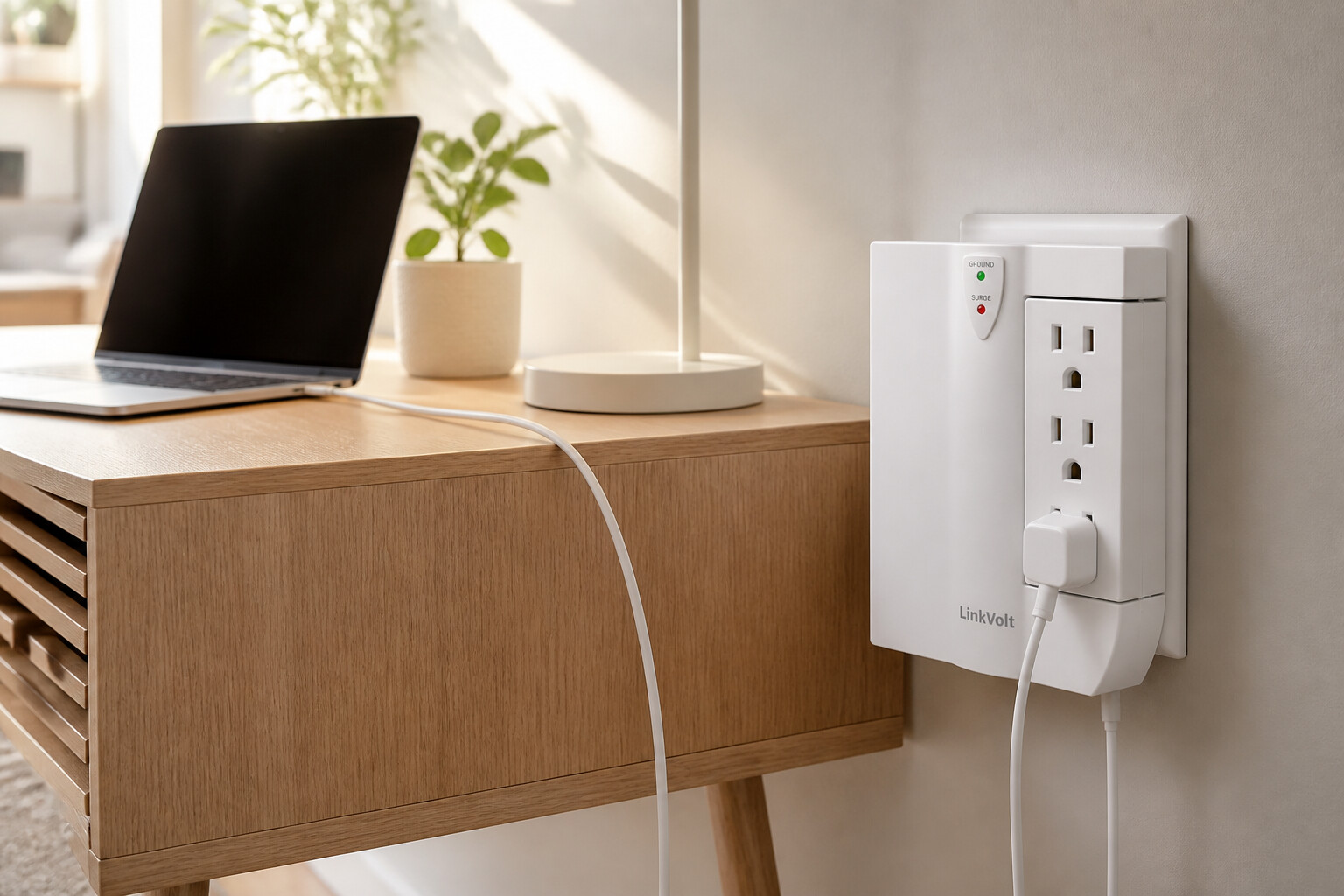
A more functional home does not always require new furniture or a renovation. Sometimes the most useful upgrade is simply giving everyday devices safer, cleaner and more flexible access to power.
A flexible wall-mounted power setup can keep everyday devices accessible without adding another loose strip to the floor.
Small homes are expected to do more than ever. A dining table becomes a desk, a console becomes a charging station, and a bedroom corner may double as a video-call backdrop. Yet many of these spaces still depend on one or two wall outlets placed for a different era.
That mismatch creates familiar problems: bulky adapters compete for space, cords cross walkways, furniture blocks receptacles, and a temporary setup quietly becomes permanent. Before buying another gadget, it is worth looking at the small piece of infrastructure that supports all of them: how power is accessed and organized.
Small Spaces Do Not Need More Tech—They Need Better Access
The usual response to a shortage of outlets is to add a long power strip. That can solve the immediate problem, but it may also create a new object to hide, another cable to route and another surface that collects chargers.
In a compact room, the better question is not “How many outlets can I add?” It is “Where do I actually need power, and how can I keep that access tidy?” A wall-mounted solution can be useful when devices stay close to the existing receptacle. A corded strip makes more sense when power must reach a desk or media cabinet several feet away. Matching the format to the room prevents overbuilding the setup.
Start With the Devices You Use Every Day
Make a quick list before choosing any accessory. In a home office, the essentials may be a laptop, monitor and lamp. Beside a sofa, they might be a reading light and phone charger. In a kitchen, the priority is often keeping occasional appliances unplugged and the counter clear.
Also look at plug shape, not only device count. Large charging blocks can cover neighboring outlets even when there are technically enough receptacles. Side-facing or rotating outlets can give bulky adapters more breathing room and help cords leave the wall in a direction that suits the furniture.
Why Outlet Orientation Matters
Most people notice outlet capacity first, but orientation has an equally important effect on daily use. A plug that points directly into a cabinet can bend its cable sharply. An adapter placed behind a desk may force the furniture farther from the wall. These are small annoyances, but they shape whether a room feels intentional or improvised.
A wall-mounted option such as the LinkVolt rotating outlet extender can provide multiple connection points while allowing the outlet module to turn toward the direction that works for the space. The useful idea is broader than any one product: power access should adapt to the room rather than forcing the room to adapt to it.
A Cleaner Setup Is Easier to Understand
Cable organization is often treated as a cosmetic project, but visibility has a practical benefit. When every plug has an obvious destination, it is easier to disconnect the right device, spot a damaged cord or notice when an adapter is running unusually warm.
Keep power accessories in the open rather than burying them beneath rugs, behind cushions or inside tightly packed storage. Leave room around adapters and avoid routing cords through places where chairs, drawers or doors can pinch them. A simple setup is usually easier to check and maintain than a complicated one.
Treat Surge Protection as One Layer, Not a Guarantee
Some wall taps and power strips include surge protection, which is designed to help limit certain voltage spikes. It is a useful layer for everyday electronics, but it is not a promise that every event will be harmless. Protection components can also age after repeated or significant surges.
If a unit has status lights, check what they mean in the manufacturer’s instructions and look at them periodically. Replace equipment that is damaged, discolored, loose or no longer indicates normal protection. During severe electrical storms, follow local safety guidance and remember that sensitive or critical equipment may require a more comprehensive protection plan.
Do a Five-Minute Room Check
Walk through the room with the same attention you would give a furniture layout. Is a receptacle carrying several high-demand appliances? Are plugs fully seated? Does a cord cross a path or sit beneath a rug? Is a charger trapped where heat cannot escape? Is a child or pet likely to pull on a cable?
Then remove what is no longer needed. Retire damaged cords, unplug duplicate chargers and relocate devices that have gradually accumulated around one outlet. The goal is not to connect the maximum number of items. It is to create a setup that supports the devices you actually use while respecting the rating of the outlet and power accessory.
The Best Upgrade Disappears Into Daily Life
Good home technology is often quiet. It does not demand attention; it removes friction. A well-planned power point lets a lamp, laptop or charger work where it is needed without a tangle of cables becoming part of the décor.
For renters, apartment dwellers and anyone working with limited space, that can be a meaningful improvement without construction. Start with the room, choose the right format for the distance and plug shapes involved, and keep the final arrangement visible and easy to inspect. The result may not be the most dramatic home upgrade, but it is one you will appreciate every day.
