

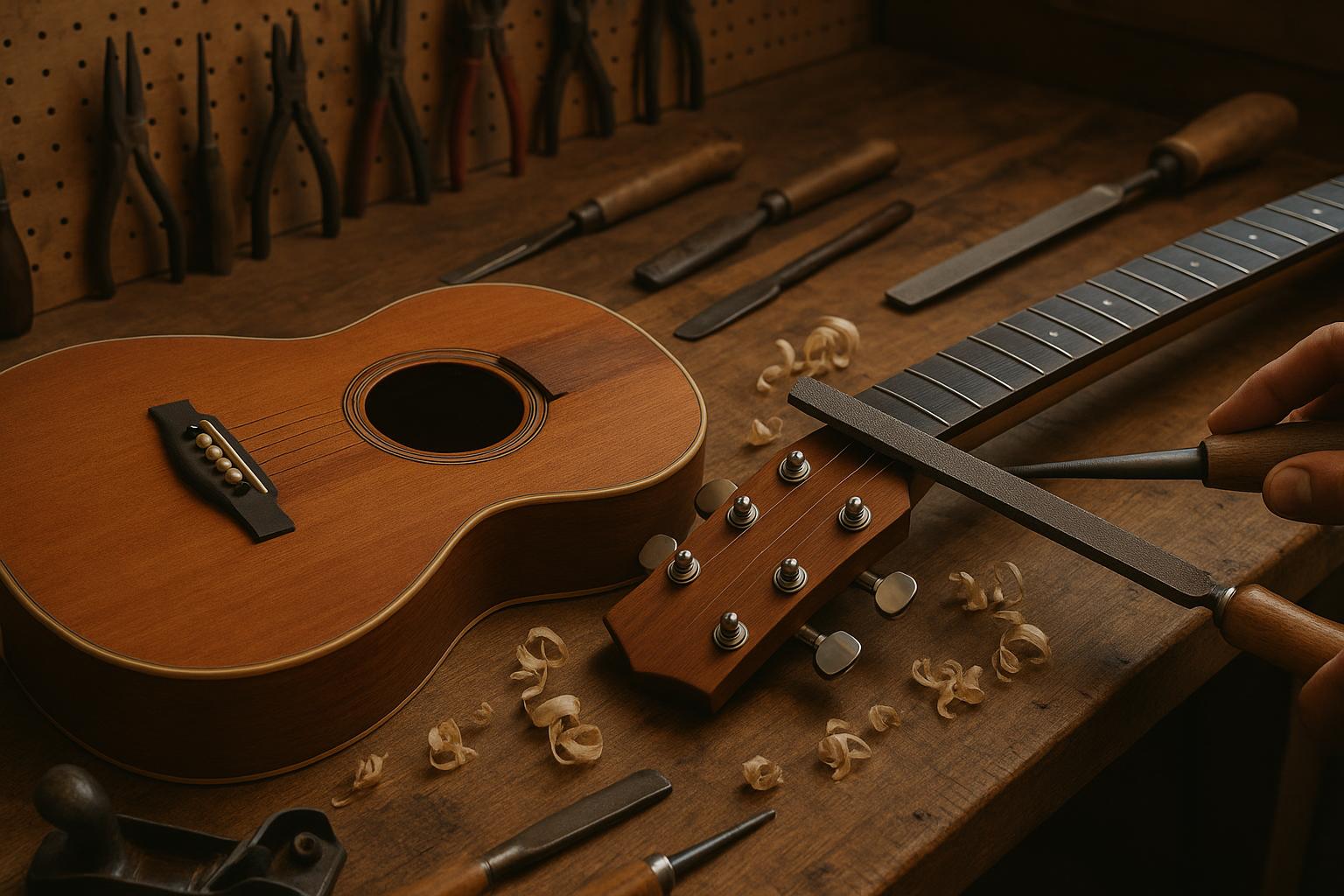
If you have ever admired a beautifully built guitar, there is a good chance you have also appreciated the craftsmanship that went into every curve, fret, and finish. Luthiery is the art of building, repairing, and maintaining stringed instruments, and it combines woodworking, precision, patience, and a love of music. While becoming a professional luthier takes years of experience, learning a few basic techniques can help any guitarist better understand their instrument. From simple maintenance to recognizing when a repair requires expert attention, knowing how guitars are built creates a stronger connection with the music you play.
Understanding The Craft
Every great guitar begins with careful planning, quality materials, and the right equipment. Whether someone dreams of building an acoustic guitar from scratch or simply wants to perform routine maintenance, having the proper Luthier tools makes every job more accurate and enjoyable. Specialized files, fret crowning tools, straightedges, measuring gauges, clamps, and precision rulers all serve specific purposes that standard household tools cannot easily replace.
Learning how these tools work also helps guitar owners appreciate the complexity behind even the simplest adjustments. A properly leveled fretboard or accurately cut nut slot may look effortless when finished, yet each step requires careful measurements and a steady hand. Understanding these fundamentals often leads to better instrument care, helping guitars stay comfortable to play for many years.
Small Adjustments Matter
One reason many players become interested in luthiery is the desire to improve guitar tone without purchasing another instrument. Small adjustments often produce surprisingly noticeable results. String height, neck relief, pickup positioning on electric guitars, saddle shaping, and proper intonation all influence how a guitar feels and responds.
Regular maintenance also prevents minor issues from becoming larger repairs. Seasonal humidity changes can affect wood movement, while worn strings and accumulated grime gradually reduce performance. Learning how to clean a fretboard, polish frets, check neck alignment, and replace strings correctly helps preserve both sound and playability.
Of course, not every repair belongs on a weekend workbench. Cracked tops, loose braces, severe neck problems, and structural damage usually require experienced hands. Knowing the difference between routine maintenance and advanced repair is part of becoming a knowledgeable guitar owner.
Patience Builds Better Results
Unlike many hobbies that reward speed, luthiery rewards patience. Every measurement deserves a second look, and every cut should be made with intention rather than urgency. Rushing through a fret level or sanding too aggressively can create more work than the original problem.
Many beginners discover that practicing on inexpensive instruments builds confidence before attempting work on a favorite guitar. This approach allows mistakes to become valuable lessons instead of expensive setbacks. It also helps develop the habit of slowing down and evaluating each step before moving to the next.
Working with wood also teaches respect for natural materials. No two pieces behave exactly alike. Grain direction, density, moisture content, and finishing techniques all influence the final result. Accepting those differences becomes part of developing practical skills and realistic expectations.
Building Appreciation For Quality
Even if you never build a complete guitar, learning about luthiery changes how you evaluate instruments. Details that once seemed insignificant begin to stand out. Smooth fret ends, consistent finish work, carefully fitted neck joints, and properly cut nuts reveal the attention invested during construction.
This knowledge can also make shopping for a new guitar less overwhelming. Rather than focusing only on brand names or appearance, buyers often begin examining craftsmanship, setup quality, wood selection, and overall playability. Those factors frequently contribute more to long-term satisfaction than cosmetic features alone.
Many players also gain a greater appreciation for handmade instruments after learning how many hours go into shaping, sanding, fitting, finishing, and final setup. Every completed guitar reflects dozens of careful decisions that influence both appearance and performance.
Keep Learning And Practicing
Luthiery offers an opportunity to combine creativity with practical skill. There is always another repair technique to study, another woodworking method to practice, or another setup adjustment to master. Books, instructional videos, and hands-on workshops can all help expand your understanding while building confidence over time.
The goal does not have to be building a concert-quality instrument in your garage. Simply learning how your guitar functions, maintaining it properly, and recognizing quality craftsmanship can deepen your appreciation for every note you play. As your knowledge grows, so does your ability to care for the instrument that helps create your music.
A basic understanding of luthiery encourages more thoughtful ownership, better maintenance habits, and a stronger connection to the guitars that inspire musicians every day.
