

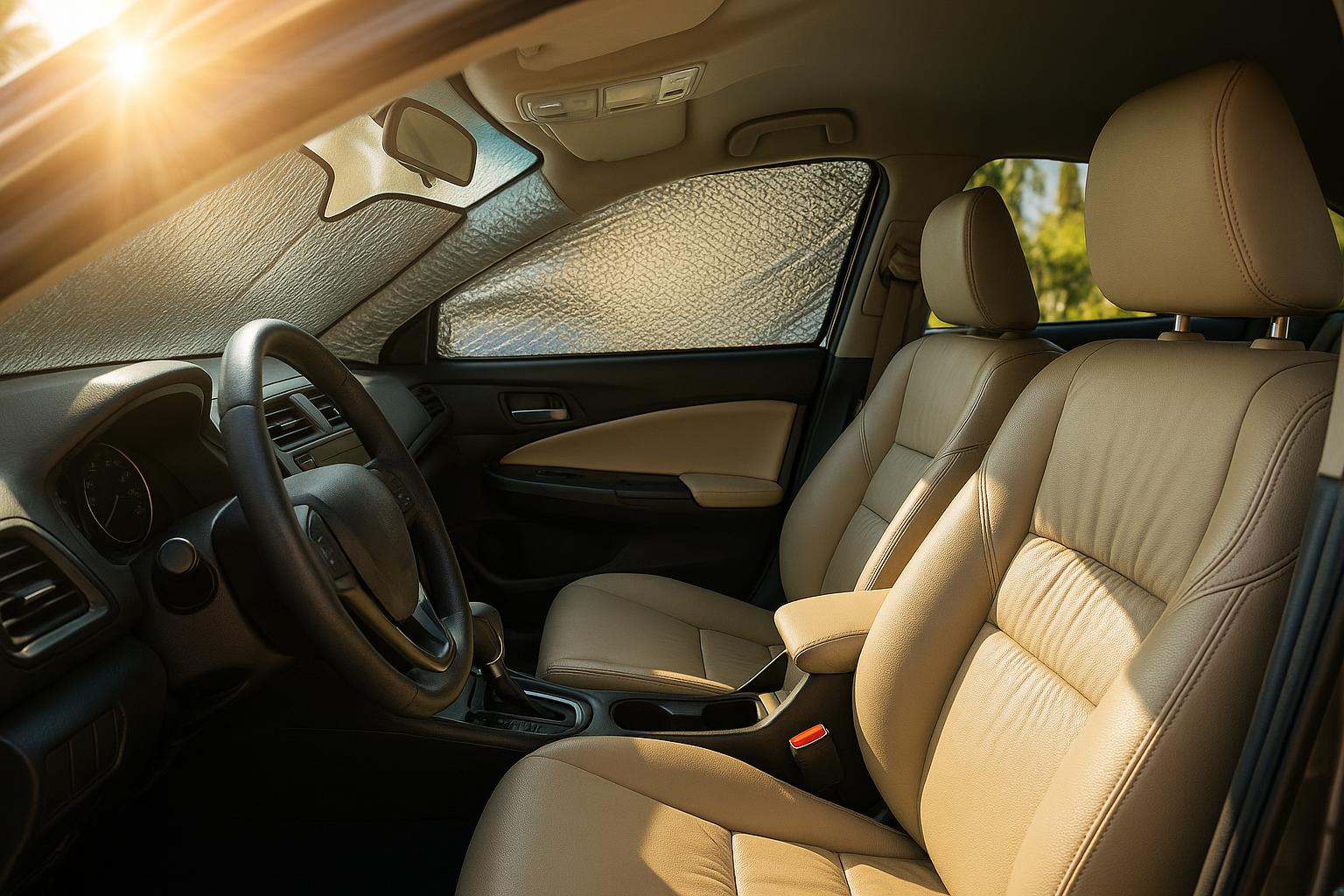
Australians know firsthand how punishing the sun can be. While we diligently apply sunscreen to protect our skin, we often leave our second-largest investment baking in the driveway. The intense heat and ultraviolet radiation do more than make your steering wheel uncomfortably hot. Over time, prolonged sun exposure causes severe and irreversible damage to a vehicle interior. Whether you commute daily or only drive on weekends, implementing a few smart preservation strategies will pay dividends down the track, ensuring both your comfort and your vehicle’s long-term worth.
The Hidden Impact of Heat and Ultraviolet Rays
During a standard summer day, the cabin of a parked car can rapidly become 20 to 30 degrees hotter than the ambient outdoor temperature, easily exceeding 60 degrees Celsius. This extreme heat creates a hostile environment for both materials and passengers. Prolonged exposure causes dashboard plastics and vinyl trims to suffer from thermal degradation, leading to a grayish, pitted texture, warping, and eventual peeling.
Furthermore, high cabin temperatures accelerate off-gassing from synthetic foams and adhesives, releasing volatile organic compounds into the air you breathe. The chemicals responsible for the famous new car smell become highly concentrated and hazardous when a vehicle is baked in the sun. While the front windscreen offers some defence, the Skin Cancer Foundation warns that most side and rear car windows only block UVB rays, leaving your passengers and upholstery exposed to harmful UVA radiation.
Effective Barriers Against Solar Damage
Relying on standard window tinting is often not enough to combat this level of radiation. Across all Australian states and territories, the legal limit for aftermarket window tint on front side windows is capped at 35 percent visible light transmission. This means a significant amount of solar energy still penetrates the glass, heating up the interior surfaces and fading vibrant colours. Leaving the windows cracked open slightly is also a myth, as studies show it provides only a negligible reduction in cabin heat. Furthermore, overly dark tints can impair nighttime visibility and attract unwanted attention from law enforcement, making them an imperfect solution.
To counteract this, drivers need physical barriers that block out heat without permanently altering the vehicle. Investing in high-quality custom sun shades for car windows provides a precise fit and superior coverage compared to generic, one-size-fits-all options. Tailored shades effectively block the rays before they can bake the upholstery, keeping the cabin significantly cooler and protecting sensitive fabrics from weakening on a molecular level.
Daily Habits for Interior Preservation
Beyond installing physical barriers on your windows, adopting a few regular maintenance habits will extend the life of your cabin materials. The exceptionally high UV index in Australia causes natural oils in leather seats to dry out prematurely, resulting in stiffness and cracking. Taking a proactive approach to surface care can prevent this deterioration and keep your car looking fresh.
Consider adding the following practices to your regular vehicle care routine:
- Apply UV-blocking conditioners: Treat leather and vinyl surfaces every few months with high-quality, non-greasy protectants to replenish lost moisture.
- Use a windscreen reflector: Always deploy a reflective shield across the front dash when parking outdoors to deflect direct overhead sunlight away from the main console.
- Seek strategic parking: Whenever possible, park facing away from the sun if you do not have a front reflector, or utilise underground parking structures during peak afternoon hours.
- Clean surfaces regularly: Dust acts as a micro-abrasive. Wiping down the dashboard and seats prevents dirt from grinding into the materials as they expand and contract with the heat.
The Financial Payoff of a Pristine Cabin
The benefits of interior preservation extend well beyond daily driving comfort. When it is time to sell or trade in your vehicle, the state of your cabin heavily influences the final appraisal. Dealership evaluators actively deduct points for sun damage, specifically targeting faded door panels, brittle trim, and cracked leather.
Even if the engine is in pristine condition, secondary buyers often equate a faded interior with overall mechanical neglect. As automotive experts emphasise, maintaining a vehicle’s original materials and overall condition is critical for retaining long-term value, much like how provenance and preservation dictate worth in car collecting. Used cars that have been protected with tailored window coverings and regular conditioning consistently retain valuations closer to their maximum market potential.
In a country renowned for its harsh climate, taking a proactive approach to vehicle care is the smartest decision a car owner can make. Protecting your car from the harsh sun is an ongoing necessity, not an optional luxury. By understanding the vulnerabilities of automotive glass, investing in the right window coverings, and maintaining your interior surfaces, you can prevent costly UV degradation. Taking these simple preventative steps ensures your cabin remains a comfortable, safe, and visually appealing space for years to come.
