

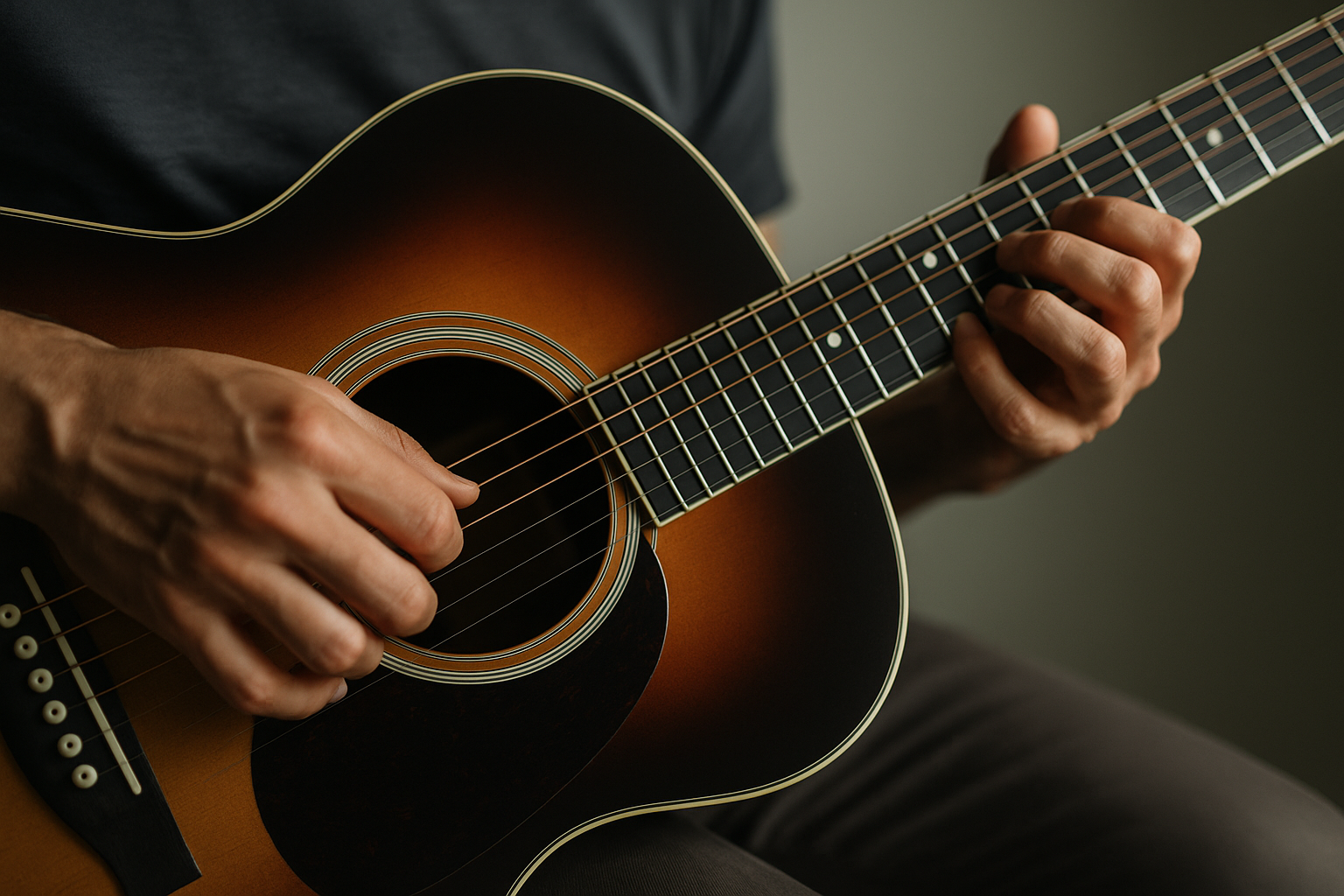
Every guitarist knows the temptation. You see a new pedal demo, your favorite player swears by a certain amp, and suddenly it feels like the missing piece between you and tonal perfection. It’s easy to believe that a few knobs and switches hold the key to that elusive sound in your head. But spend enough time around serious players, and you start to notice something consistent. The great ones sound like themselves whether they’re plugged into a vintage tube stack or a borrowed practice amp. That’s because tone, the kind that actually moves people, starts in the fingers, not the pedalboard.
The gear myth runs deep. It’s not that quality equipment doesn’t matter, it absolutely does, but tone isn’t a commodity you can buy. You can’t package touch, timing, and intent. A Les Paul through a cranked Marshall might roar for one player and fizzle for another. The difference is how the player interacts with the strings, how they control attack and release, how their personality translates through six pieces of wire and a slab of wood.
The Science Of Feel
There’s something oddly physiological about good tone. It’s not mystical, it’s muscle memory meeting micro-timing. Tiny adjustments in pick angle, finger pressure, and vibrato width shape sound in ways even the most sophisticated effects can’t replicate. Great players spend years unconsciously training those details until their hands and ears are in sync. When that connection happens, tone becomes something you express, not something you dial in.
It’s the same reason why some players can make a cheap pawnshop guitar sound alive. Their technique compensates for imperfections. They instinctively use touch to balance frequencies, to make a thin-sounding string bloom with warmth or a dull note sing. That’s not sorcery, it’s sensitivity, something no amount of gear swapping can replace.
Where Gear Still Matters
Of course, this doesn’t mean you should toss your rig into the nearest river. The best equipment does two things: it amplifies your personality and gets out of your way. A guitar that feels right in your hands will invite better playing. The same goes for pickups that suit your style or amps that respond naturally to your dynamics. Accessories like guitar pickguards might seem like small details, but they affect comfort and the way you physically approach the instrument. Materials, thickness, and even the subtle friction under your picking hand can change how freely you move. Those nuances add up.
Still, the difference between good tone and great tone almost never comes down to what’s on your pedalboard. It’s the conversation between you and the guitar that defines your sound. Gear enhances that dialogue, but it doesn’t start it.
How Listening Shapes Tone
A player’s ear might be the most underrated piece of equipment in the whole chain. Listening closely, to records, to room acoustics, to your own playing—teaches you what tone really is. Players who chase tone through equipment often overlook how much the brain does the heavy lifting. Training your ear to notice subtleties, to feel when notes breathe or collide, will make your tone evolve more than swapping amps ever could.
The process is iterative. You play, you listen, you adjust. That kind of loop sharpens not just your sound but your musical instincts. Over time, you start to hear your own fingerprint emerge. When that happens, every note feels connected to your intent. The confidence that comes from that realization can’t be bought—it’s earned through countless hours of repetition and awareness.
The Modern Studio Reality
In today’s world, much of what defines tone happens after the recording light turns on. Even for players who still record live, the studio changes how tone is perceived. Compression, mic placement, and digital mastering can alter what you thought you played. That’s why being comfortable in a studio environment is as important as feeling at home onstage.
Many artists now work closely with a music production company that understands how to preserve authenticity in a polished setting. These collaborations can elevate a raw performance without sterilizing it. When producers respect the individuality of a guitarist’s tone, the result is music that feels organic, not processed. The best engineers know their role isn’t to fix tone, but to reveal it.
Tone As A Mirror
At its core, tone is a mirror of your habits, emotions, and evolution. It changes as you do. The same player can sound completely different ten years later, not because of a gear overhaul, but because life has shaped their touch. Every heartbreak, every triumph, every late-night practice session leaves fingerprints on your playing. That’s what makes tone so personal, it’s not just vibration and wood, it’s history.
You can study tone endlessly, but the irony is that the best tones aren’t perfect. They’re honest. They crackle a little when pushed, waver slightly under pressure, and somehow feel more alive because of it. Chasing perfection through gear misses the point. Chasing connection through your hands, that’s where the real tone lives.
In the end, tone is like handwriting. You can imitate someone else’s for a while, but your true style always bleeds through. Gear can support it, highlight it, or get in the way of it, but it can’t invent it. What makes a guitarist unforgettable isn’t their equipment, it’s the unfiltered communication that happens when their fingers meet the strings.
