

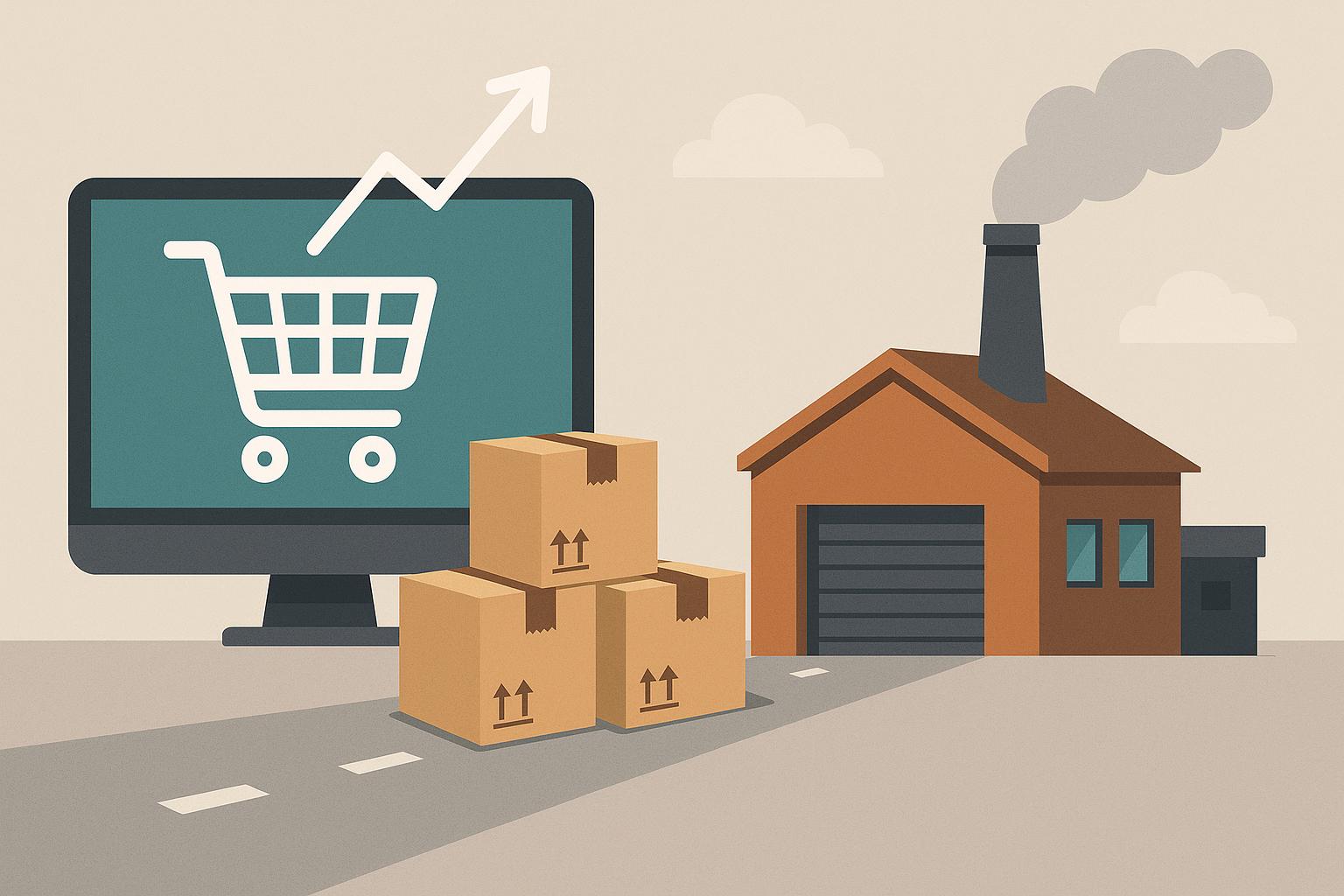
Every business owner dreams about the day their marketing finally works. A video goes viral, a search ranking jumps overnight, or a chatbot starts closing sales while everyone sleeps. That rush of new customers feels like the payoff for years of hard work. But there is a strange twist that catches many growing businesses off guard. The moment online demand grows faster than the workshop, warehouse, or support team behind it, that exciting growth can quietly turn into a serious problem. What should feel like a victory lap can turn into a scramble to catch up almost overnight.
This pattern shows up more often than most people expect, and it rarely feels dangerous while it is happening. A small shop sees a surge of orders after a marketing campaign finally clicks. A software company watches signups climb after a product mention spreads online. A service business gets flooded with calls after a new ranking pushes them to the top of search results. In each case, the celebration lasts only a few days before a new kind of stress sets in. Suddenly, the business has more customers than it can actually serve well, and every extra order starts to feel like added pressure instead of added profit.
The heart of this problem is simple but easy to overlook. Marketing and fulfillment are two completely different systems, and they rarely grow at the same speed. A marketing campaign can double demand in a single week, while a workshop, kitchen, or support team usually needs months to double its capacity. When those two speeds do not match, something has to give. Either customers wait longer than they should, quality slips under pressure, or the team burns out trying to keep up with a flood they were never prepared for.
What makes this challenge especially tricky is that it often looks like success from the outside. Sales numbers climb, website traffic spikes, and reviews mention how popular a business has suddenly become. Meanwhile, behind the scenes, staff are working late, inventory is running short, and customer complaints are quietly piling up. Recognizing this gap early, before it damages a brand’s reputation, is one of the most important skills any growing business can develop. The experts featured in this article have each faced this exact challenge from very different angles, and their experiences offer a clear roadmap for handling demand without losing control of quality.
When Fast Results Create a Fulfillment Problem
Nowhere is this pattern more visible than in modern digital marketing, where results can now arrive far faster than they used to. Search rankings that once took months to build can sometimes climb in a matter of days, and paid advertising can bring in a wave of new customers almost overnight. This speed is exciting, but it also removes the natural warning period that slower growth used to provide. Businesses no longer have months to prepare for a surge, they sometimes have only days.
Vlad Ivanov, Founder of the Search GAP Method, has watched this exact scenario play out with clients who suddenly found themselves buried in new business.
“I have watched a fresh website climb to page one in under 48 hours using our content gap method, no backlinks required. The excitement fades fast once orders start pouring in faster than a small workshop can pack and ship them. We now warn every client that ranking fast is only half the job, fulfillment has to be ready too. Speed in search means nothing if the phone rings before the shelves are stocked.”
This insight highlights something many marketers overlook entirely. Getting attention is only the first half of the equation. The second half, actually delivering on that attention with real products or services, requires just as much planning as the marketing campaign itself.
Aligning Marketing Growth With Real Capacity
The same challenge shows up on the paid advertising side of the business world, where campaigns can be scaled up almost instantly with the click of a button. A budget increase that seemed reasonable on a spreadsheet can translate into a flood of leads that overwhelms a small operations team within days. This mismatch between marketing speed and operational speed is one of the most common growing pains among ambitious companies.
Joshua Eberly, a marketing strategist at Marygrove Awnings with over a decade of experience scaling paid media for both agency and brand-side companies, has seen this exact tension play out firsthand.
“I have scaled paid media campaigns that doubled a client’s leads in thirty days, and the calls came in immediately. One brand owner called me in a panic because production could not keep pace with the orders we generated. We rebuilt his KPIs around fulfillment capacity, not just traffic, and the business finally caught up with its own growth. Marketing that outruns operations does not feel like a win, it feels like a fire drill.”
His experience points toward an important shift in thinking. Instead of measuring marketing success only by traffic or leads, smart businesses now measure it against their actual ability to deliver a great experience once those leads become paying customers.
Building Systems That Absorb Sudden Growth
Sudden demand does not only overwhelm physical workshops and inventory shelves, it also overwhelms customer support teams tasked with answering every question that comes flooding in. A single viral moment can generate thousands of support tickets almost overnight, leaving even well-staffed teams scrambling to keep response times reasonable. Businesses that survive these spikes usually have some kind of system in place before the surge ever begins.
Vera Sun, Co-Founder and CEO of Wonderchat, built her company specifically to help businesses absorb these sudden waves of customer demand without losing quality.
“We built Wonderchat because support teams kept drowning the moment marketing worked too well. One client saw ticket volume spike 300 percent after a single viral post, and their small team could not keep up. Within days, our AI agent answered the technical questions instantly, using their own documentation as the source. Demand should never outpace your ability to answer it, and that gap is exactly what we close.”
This example shows a broader truth about growth. The businesses that handle sudden demand well are not necessarily the ones with the biggest teams. They are the ones who built flexible systems in advance, ready to expand the moment traffic or interest suddenly spikes.
Physical product businesses face perhaps the most visible version of this challenge, since a website can generate orders far faster than a small workshop can build, pack, and ship real items. Even a modest increase in online traffic can translate into a backlog that takes weeks to clear if inventory systems are not built to handle sudden shifts in demand. This gap between clicks and shipments is where many growing e-commerce businesses run into serious trouble.
Mertel Hasanov, Founder of Kunkune, experienced this firsthand as his small UK electronics store began attracting more attention online than his original stockroom setup could handle.
“When Kunkune started getting real online traffic, our tiny stockroom could not keep pace with the flood of orders. We had customers waiting over a week for parts that should have shipped the very same day. Once we rebuilt our inventory system around actual demand data, dispatch times dropped back under 24 hours. Growing your audience means absolutely nothing if your shelves cannot keep up with the click.”
His experience shows that even small businesses without massive resources can solve this problem, as long as they are willing to rebuild their systems around real demand patterns rather than guesswork.
The Real Lesson Behind Every Growth Surge
These four stories, spanning search rankings, paid advertising, customer support, and physical inventory, all circle back to the same central lesson. Growth itself is never the problem. The real danger comes from growth that arrives faster than the systems meant to support it. A business can have brilliant marketing, a viral moment, or a sudden ranking jump, and still stumble badly if its fulfillment, support, or production capacity was never built to match that pace. The businesses that come out ahead are rarely the ones with the flashiest campaign, they are the ones ready to handle what that campaign actually brings through the door.
The smartest businesses treat marketing and operations as two halves of the exact same project, rather than separate departments working independently. Before launching an aggressive campaign or chasing a fast ranking win, they ask a simple but important question. Can we actually deliver on this promise if it works exactly as planned? Answering that question honestly, before the surge arrives rather than during the chaos that follows, is often what separates a business that thrives under pressure from one that collapses under its own success.
Online demand outrunning the workshop is not a sign that a business is doing something wrong. In many ways, it is a sign that the marketing worked exactly as intended. The real challenge, and the real opportunity, lies in building a business strong enough on the inside to match the excitement happening on the outside. That balance, once achieved, turns a stressful spike into sustainable, long-term growth.
