

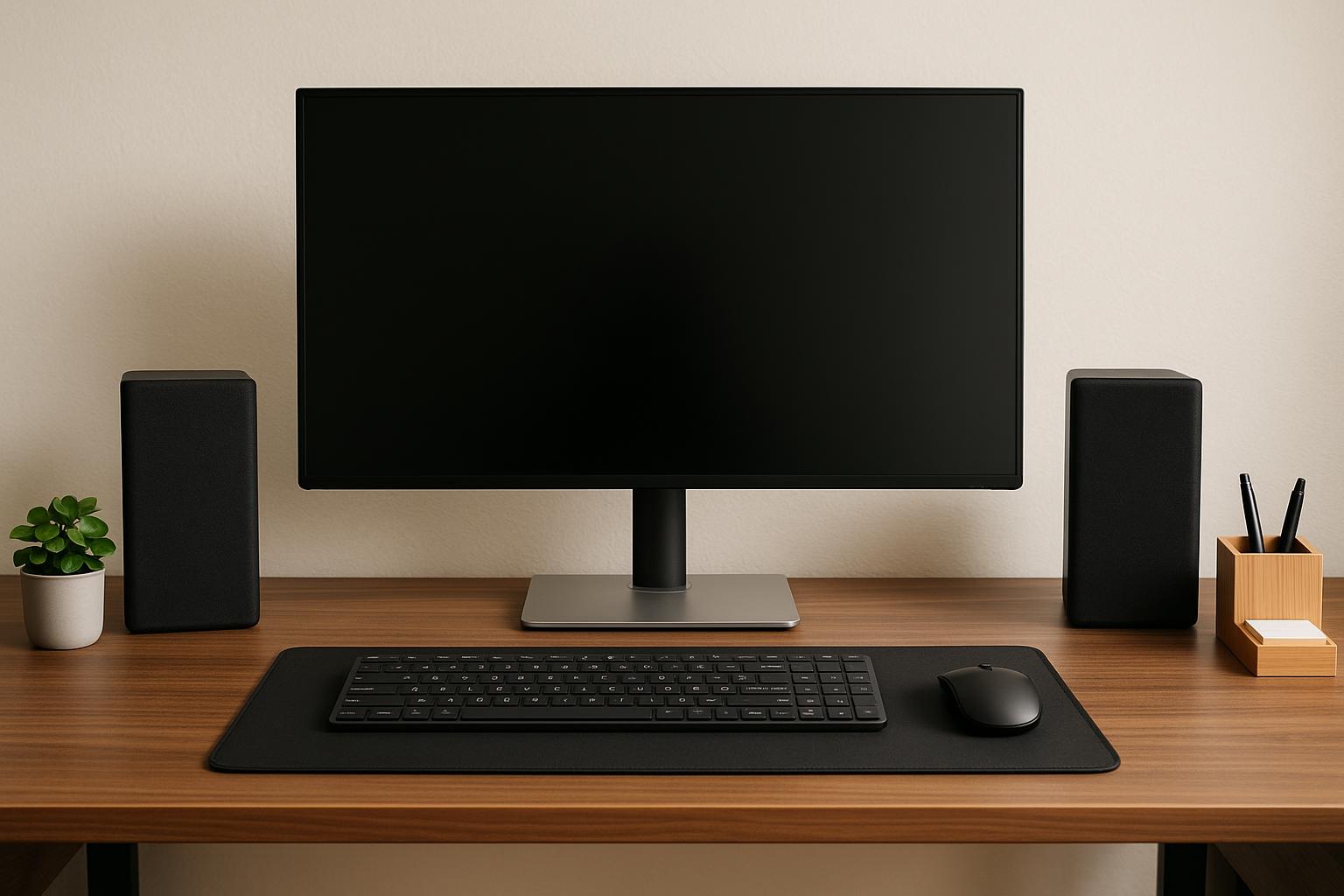
A badly set-up desk has a way of making itself known slowly. Not in one dramatic moment, but through the small annoyances that collect during the day: shoulders creeping up towards your ears, wrists resting at an awkward angle, a lower back that starts complaining by mid-afternoon, or a screen you keep leaning towards without realising it. By the time you notice the discomfort, you’ve often been sitting in the same position for hours.
One of the simplest places to start is with standard desk height, because the height of the work surface affects almost everything else. If the desk is too high, your shoulders and arms have to work harder than they should. If it’s too low, you may end up rounding forward, reaching down or putting extra strain through your neck and upper back.
Your Body Shouldn’t Have to Adapt All Day
A workstation should support the person using it, not quietly demand that they fold themselves into whatever position the furniture allows. The tricky part is that many people inherit their desk setup rather than choosing it carefully. They use the table that fits the room, the chair that was already there, or the office furniture that came with the job, and then assume any discomfort is just part of working at a desk.
It doesn’t have to be. Small changes can make a surprising difference, especially when they help the body sit in a more natural position. Ideally, your elbows should be able to rest comfortably near your sides, your forearms should sit roughly level with the desk, and your wrists shouldn’t feel like they’re bending sharply up or down while typing.
The chair matters too, because desk height and chair height work together. A desk might be technically “standard,” but if the chair is too low, it can still feel wrong. Raise the chair and suddenly your feet may no longer sit comfortably on the floor, which is where a footrest can become useful. Ergonomics is rarely about one perfect measurement; it’s about how the whole setup fits the person.
The Best Setup Is the One You Can Actually Use
There’s a lot of advice out there about creating the ideal workstation, but it can become overwhelming quickly. Monitor height, chair depth, lumbar support, keyboard position, lighting, desk depth, cable placement, sit-stand options — before long, what started as a simple adjustment starts to feel like assembling a cockpit.
It helps to begin with what you notice most. Are you leaning forward to see the screen? Are your shoulders tense while typing? Do your feet dangle or tuck under the chair? Do you run out of desk space and end up working in a cramped little corner? These everyday clues usually tell you where the setup is failing.
A good desk also needs to suit the actual work being done. Someone using two monitors needs different space from someone working mainly on a laptop. A designer, bookkeeper, student or receptionist may all need different layouts, even if they’re sitting for similar hours. The right setup should make tasks easier, not just look neat in a furniture catalogue.
Comfort Is a Productivity Tool
People often treat office comfort as a nice extra, but it has a direct effect on focus. It’s hard to do good work when half your attention is going towards shifting in your chair, stretching your neck or trying to find a less irritating position.
Small Adjustments Can Change the Whole Day
A better desk setup won’t magically make every workday calm, but it can remove unnecessary strain from the background. When the height, chair and screen position work together, sitting down to work feels less like bracing yourself and more like settling into a space that’s been properly considered.
