

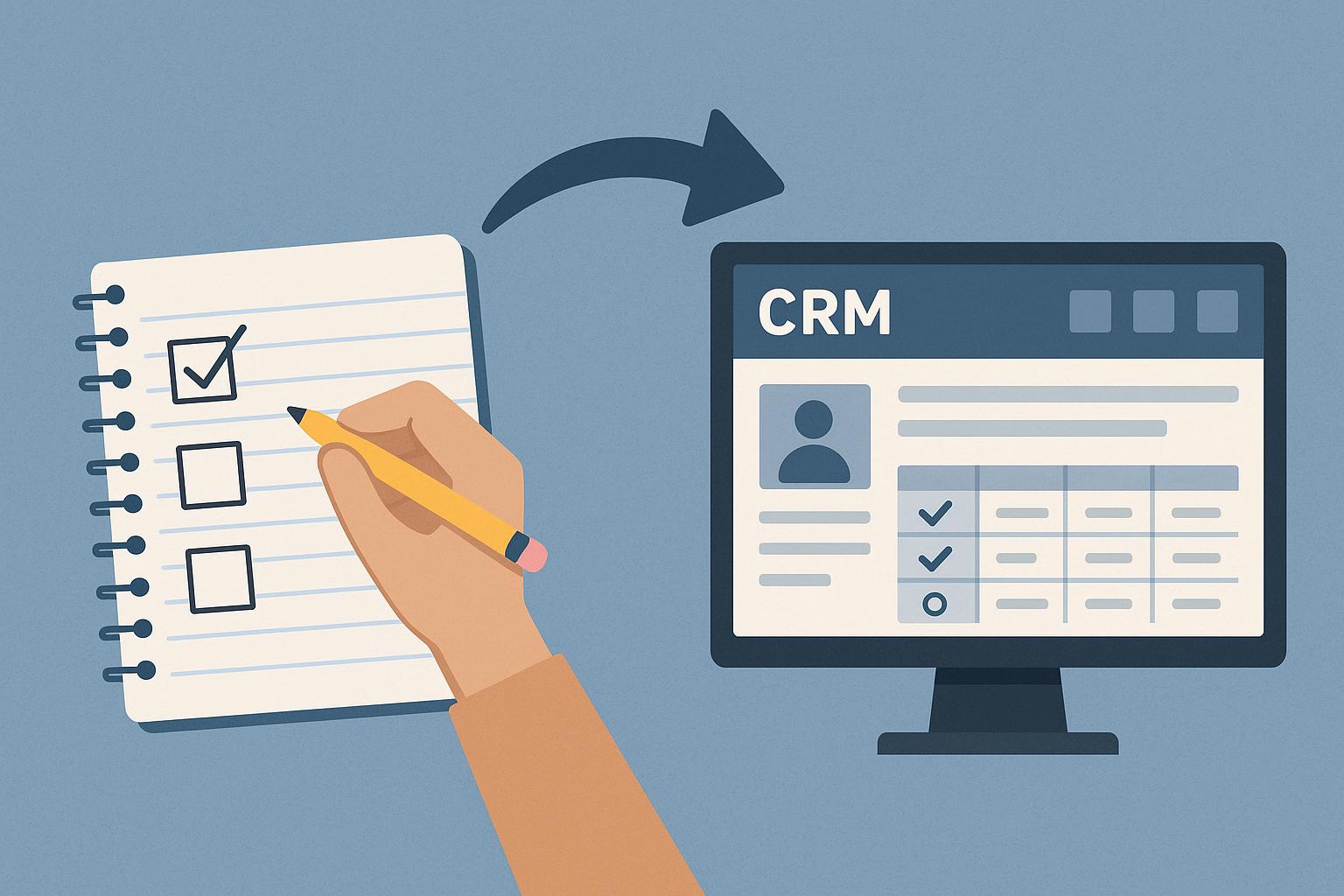
Customer relationships need to be strong. Small businesses especially depend on this. The relevant operations and processes must run smoothly to ensure this. This is even more crucial when businesses begin to grow.
As a business grows, its old systems will slow things down. It is harder to pull information up quickly. It is tougher to manage leads effectively. Such issues might not seem significant at first, but these things tend to become even more serious the longer they are left unresolved.
Once you spot the signs, you need to take steps. This means moving away from manual customer relationship management – also known as CRM. Fortunately, this post outlines four key steps to do this.
Centralize Data into a Dedicated Platform
If you’re ever had to dig through emails, spreadsheets, and sticky notes just to find a customer’s details, then you’ll already know just how frustrating manual CRM can be.
In the early days of a business, it’s enough. You know your customers. Your team is small. Information is relatively easy to find. But as more customers come through the door, things start to slip through the cracks.
That’s why you need to bring all of your customer information into a single platform. When everything is stored in one place, your team spends less time searching for information and more time actually helping customers.
Automate Data Capture
Let’s be honest: nobody begins a business because they love entering data. Who does?
Yet, manual data entry takes up a surprising amount of time. Every new lead, every new enquiry, every new customer interaction… All of this has to be recorded somewhere. As a result, details are missed or entered incorrectly.
Automating that process makes a huge difference. Information is pulled directly from contact forms, emails, and other customer touchpoints – all without someone having to manually copy and paste everything across.
Lots of businesses now turn to AI CRM tools. Alongside capturing information automatically, such tools help organize customer data, highlight important opportunities, and reduce the amount of admin work teams deal with.
Set Up Standardized Pipeline Workflows
Manual CRM allows everyone to develop their own way of doing things. One employee follows up with leads after two days. Another waits a week. Before long, there’s no clear process, and opportunities are easily overlooked.
Create standardized workflows instead. This helps bring consistency to the way leads and customers are managed. Everyone follows the same process. Important steps are remembered. It’s so much easier to see where things stand at any given time.
There’s no need for complicated. In fact, a simple and clearly defined pipeline is enough to keep things moving in the right direction.
Integrate Communication Channels
Customers don’t communicate in one way. Some prefer email. Others pick up the phone. Many use social media or live chat nowadays.
The challenge? Well, that comes when those conversations are happening in different places. This means context is easy to lose. Customers need to repeat their issue multiple times because there’s no connected system.
Integrate communication channels to prevent this. Conversations will be connected. Customer histories will be easier to view. Your team will respond with a much clearer understanding of the relationship, too.
To conclude, all growing businesses reach a stage where manual customer management just isn’t practical anymore. What once felt manageable suddenly isn’t. It takes longer. It creates more work. It increases the risk of mistakes.
And this is why your business should move away from manual CRM. Doing so means the system is easier to manage and better equipped to support future growth.
