

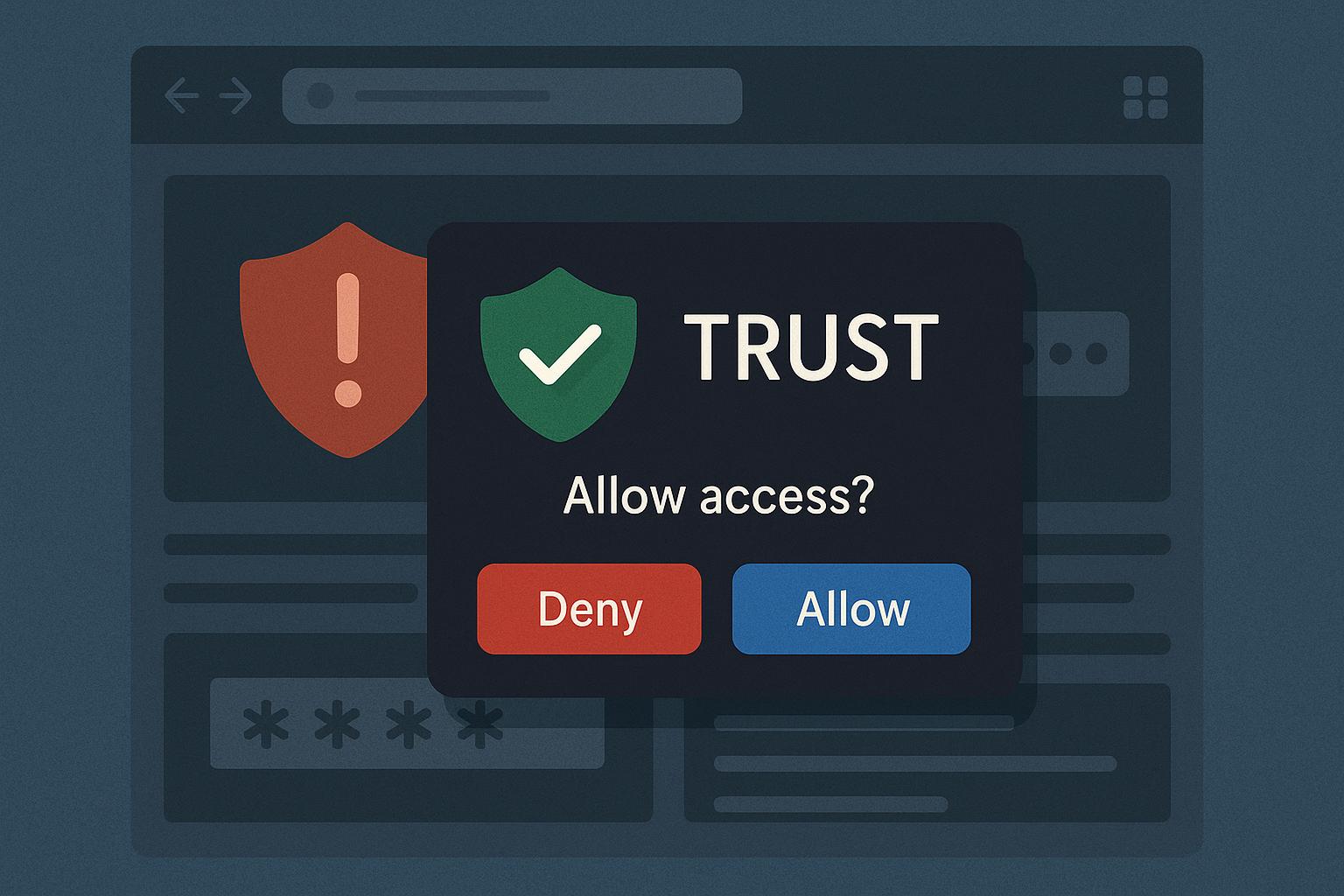
For years, cybersecurity lived in a separate world from design. Security teams focused on firewalls, encryption, and technical protocols, while designers focused on colors, layouts, and buttons. These two worlds rarely spoke the same language, and that separation made sense when computers were simple and threats were rare. Today, that wall between security and design is falling apart fast, and the reason is simple. The biggest security risk in most digital products is no longer a broken system. It is a confused user staring at a screen, unsure whether to trust what they see.
This shift did not happen overnight, but it has become impossible to ignore. Every app, website, and digital tool now asks people to make small trust decisions constantly. Should I click this link? Should I approve this permission? Should I enter my password here? Each of these tiny moments shapes whether a product feels safe or feels risky, and design plays a massive role in that feeling. A confusing screen can make even the most secure system feel unsafe, while a clear, well-designed screen can build trust almost instantly, even before real security has been proven.
This is exactly why cybersecurity is quietly turning into a design problem as much as a technical one. Hackers have learned that tricking a person is often easier than breaking through strong code. Fake login pages, confusing permission requests, and cluttered warning messages are not weaknesses in the code itself. They are weaknesses in how information is presented to a human being trying to make a fast decision. When design fails to communicate clearly, even the strongest technical security can be undone in seconds by a single confused click.
Artificial intelligence has added a completely new layer to this challenge. AI assistants now read websites, summarize content, and recommend products directly to users, sometimes without the user ever visiting the original site. This means trust is no longer built only through human eyes scanning a screen. It is increasingly built through how clearly a machine can understand and repeat what a business actually offers. Businesses that fail to communicate clearly, whether to humans or machines, risk becoming invisible or, worse, misunderstood in ways that quietly damage trust.
Why Confusing Design Becomes a Security Risk
The connection between design and security becomes obvious once you watch how real people interact with technology. Someone downloading a new app rarely reads through lengthy privacy policies or technical explanations. Instead, they scan the screen quickly and make a snap judgment based on how the interface feels. If a signup screen looks cluttered or a permission request feels vague, users hesitate, get suspicious, or simply give up halfway through. That hesitation is not a small inconvenience. It is often the exact moment where trust is won or lost completely.
Mike Kordvani, Founder and CEO of SemNexus, has seen this pattern play out repeatedly while helping startups launch and scale their mobile apps.
“I have watched startups build a beautiful app, then lose users the moment a login screen feels unsafe. We rebuilt one client’s onboarding flow to explain permissions in plain language instead of legal text. Signups rose by 31 percent within a month, simply because users understood what they were agreeing to. Good security means nothing to a user until the interface makes that security easy to trust.”
This example shows a truth many companies overlook. Strong security features only matter if people actually understand and trust them. A confusing explanation of a safe feature can feel more suspicious to a user than a clear explanation of a basic one. Businesses that treat clarity as part of their security strategy, not just a design preference, tend to build far stronger relationships with the people using their products.
Simplicity as a Core Part of Digital Trust
Security tools face an especially difficult version of this challenge, since their entire purpose is protecting people from harm. Ironically, a security product with a confusing interface can end up putting users at greater risk, not less. If setting up a security tool feels overwhelming, many people abandon the process halfway through and remain unprotected. The tools meant to keep people safe only work if people actually finish setting them up correctly.
Mark Saunders, Founder of VPNGENIX, brings a background as an Army veteran into his mission of making online privacy simple enough for everyday users to actually adopt.
“I spent years in the Army learning that trust has to be earned through consistency, not claims. At VPNGENIX, we test every tool ourselves before writing a single word of review. When we simplified our setup guide from ten steps down to three clear taps, completed installs jumped noticeably within weeks. People do not abandon security tools because they do not care, they abandon them because the process feels confusing.”
His experience highlights something important about digital trust. Even the most powerful protection becomes useless if the setup process scares people away before it ever activates. Simplifying a process is not about making a product feel less serious. It is about respecting how real people actually behave under pressure, uncertainty, or simple impatience.
When Machines Become the New Audience
As artificial intelligence becomes a bigger part of how people discover and choose products, trust is beginning to extend beyond human eyes entirely. AI systems now summarize businesses, answer questions on their behalf, and recommend services directly inside chat conversations. If an AI system cannot clearly understand what a business offers, it may skip that business entirely or, worse, describe it inaccurately. This creates an entirely new kind of trust interface, one built for machines instead of humans.
Alykhan Kara, CEO of Appear, has focused his work on helping websites communicate clearly enough for AI systems to understand and trust them.
“I started Appear because I watched great companies become invisible the moment an AI system tried to read their site. We rebuild a site’s logic into a format that models like ChatGPT and Gemini can trust instantly. One client’s AI citation rate rose sharply within weeks of restructuring their public content. Trust is no longer just about how a human feels, it is about whether a machine can understand you at all.”
This idea reshapes how businesses should think about clarity going forward. A cluttered, confusing website does not just risk losing human visitors anymore. It risks losing an entirely new audience of AI systems that increasingly stand between a business and the people trying to find it. Clear communication is quickly becoming a requirement for both human trust and machine trust at the same time.
Making Security Feel Like Part of the Experience
Creative teams face their own version of this challenge, especially as more digital workflows involve outside collaborators, shared platforms, and sensitive client information. Security steps like permission requests, access controls, and verification prompts are necessary, but they can easily feel like unwanted friction inside a creative process. When security feels like an obstacle rather than a natural part of the workflow, people often look for shortcuts that quietly undermine protection altogether.
James Rigby, Founder of Design Cloud, has worked to make secure processes feel like a natural extension of creative work rather than an interruption to it.
“At Design Cloud, we learned that a secure workflow only works if creative teams actually want to use it. We rebuilt our client request portal with clearer permission prompts, and adoption jumped almost overnight. When people understand exactly why a step exists, they stop trying to work around it. Good security design should feel like part of the creative process, not a wall standing in front of it.”
His experience reflects a broader truth that applies well beyond creative industries. Security measures succeed only when the people using them understand their purpose and feel respected by the process. A confusing or heavy handed security step invites workarounds, while a thoughtful one earns genuine cooperation.
The Real Lesson Behind the Trust Interface
Every story shared here points toward the same central idea. Cybersecurity can no longer live only inside firewalls, encryption protocols, and backend systems. It now lives inside every screen, every prompt, and every explanation a user or an AI system encounters along the way. Businesses that treat design and security as separate departments risk building strong protection that nobody actually uses correctly, simply because the experience around it feels confusing or untrustworthy.
The companies pulling ahead understand that clarity itself has become a form of security. A well-designed permission request protects users just as much as the code running behind it, because it ensures people actually understand what they are agreeing to. A simple setup process protects people because it means they finish the process instead of giving up halfway. Clear, honest communication protects businesses because both humans and AI systems can understand and trust what they represent.
As technology continues to evolve, the line between design and security will likely keep disappearing entirely. The businesses that succeed will be the ones who recognize that trust is not something added at the end of a product. It is something built into every single interaction from the very first screen a person or a machine ever encounters. That lesson, repeated across four very different industries, may be the most valuable insight any growing business can carry into the future of digital trust.
