

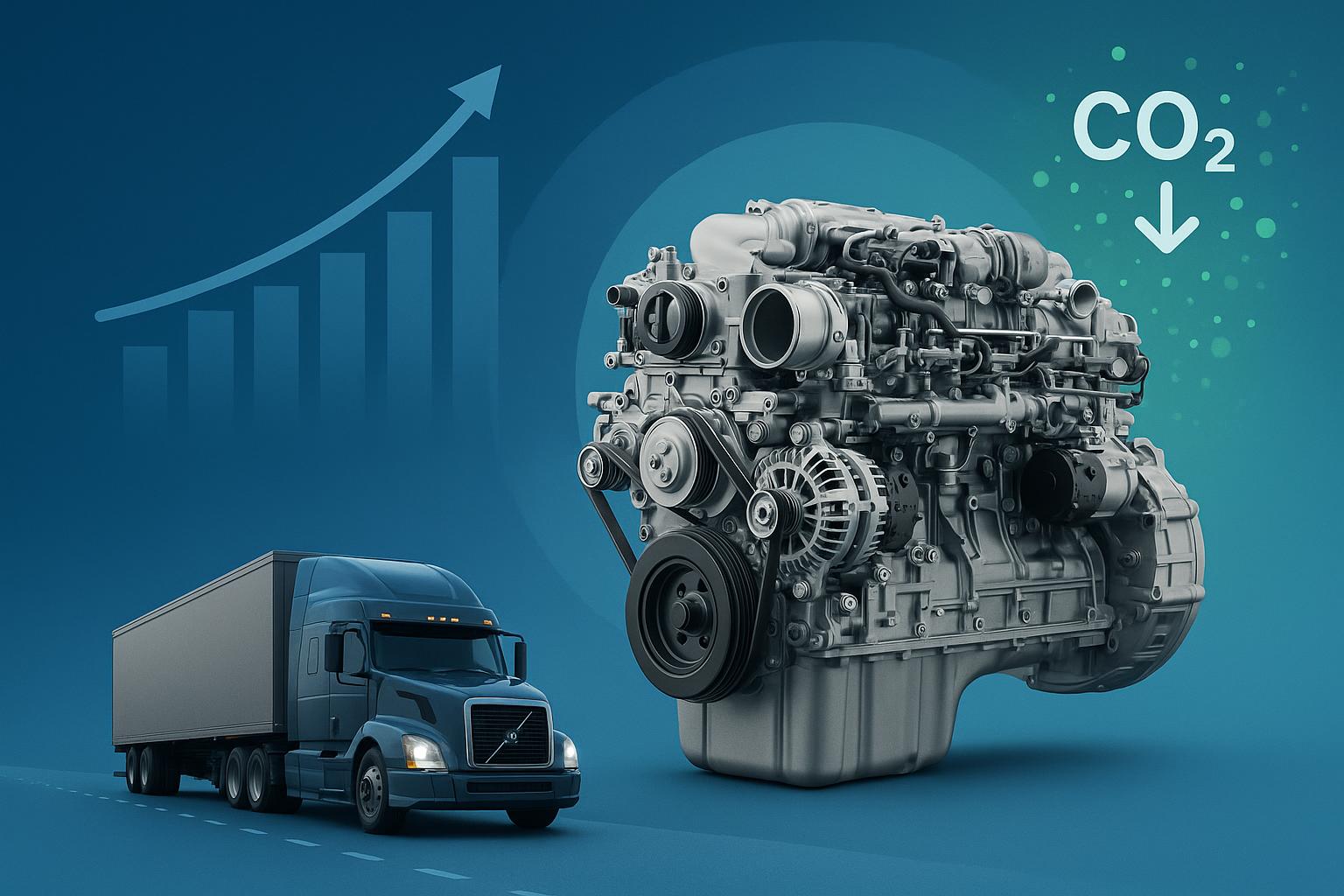
Diesel engines have been at the core of commercial transportation for decades, powering everything from freight trucks to industrial equipment. As emissions regulations tighten and operational costs rise, advancements in diesel technology are essential to maintain the sector’s vitality. The latest generation of innovations not only delivers higher fuel efficiency but also achieves previously unattainable reductions in emissions.
At the heart of many fleets’ performance standards is the Cummins ISM engine, known for its reliability and balanced design. Yet, technology is evolving rapidly, and manufacturers are introducing next-generation platforms that blend robust power with new levels of environmental responsibility.
As operators seek to minimize the total cost of ownership while meeting increasingly stringent environmental mandates, industry leaders are marrying classic diesel durability with cutting-edge components and smart controls. Today’s landscape is one in which diesel engines must compete with new energy alternatives without sacrificing the ruggedness and dependability that fleets demand.
These developments are not happening in isolation. Major original equipment manufacturers (OEMs) continue to invest heavily in research and development to push diesel technology into a new era. The integration of intelligent electronics, adaptive fuel systems, and hybrid-ready architectures is transforming what modern heavy-duty diesel engines can deliver.
Next-Generation Diesel Engines
The race to build the most efficient and environmentally conscious diesel engines is particularly fierce among leading manufacturers. Cummins, a name synonymous with diesel innovation, recently unveiled its advanced X15 engine as part of the HELM 15-liter fuel-agnostic platform. This breakthrough is designed not just for today’s heavy-duty demands but with future emissions standards in mind. According to Cummins, the new X15 engine will meet U.S. EPA and CARB 2027 regulations, setting a higher bar for fuel efficiency and overall performance within the heavy-duty segment.
Meanwhile, Mack Trucks has introduced the new MP®13 engine, delivering up to 540 horsepower and 1,950 lb.-ft. of torque, with a notable 3% improvement in fuel efficiency over its predecessors. This engine is engineered to meet EPA 2027 emissions standards through enhancements that deliver more complete combustion and lower engine-out CO₂, soot, and particulate matter.
Compliance with EPA 2027 Standards
The U.S. Environmental Protection Agency (EPA) 2027 standards represent one of the most rigorous sets of emissions requirements the industry has ever faced. Diesel engine manufacturers must now achieve significant reductions in nitrogen oxides (NOx) and particulate matter (PM) while maintaining power output and durability.
Mack Trucks’ new MP®13 engine exemplifies this shift. Delivering up to 540 horsepower and 1,950 lb.-ft. of torque, it provides a 3% improvement in fuel efficiency over previous models and meets EPA 2027 emissions standards through engine enhancements that deliver more complete combustion and lower engine-out CO₂, soot, and particulate matter.
Fuel-Agnostic Platforms
A major theme in the future of diesel is flexibility. OEMs like Cummins are pioneering fuel-agnostic platforms that enable the same engine design to be used for diesel, natural gas, or hydrogen. The HELM platform is a leader in this area, giving fleets options to transition between fuels as availability and regulatory pressure shift.
This adaptability not only reduces emissions but also ensures operational resilience as the transportation sector evolves. Fleets gain the ability to hedge against fuel price volatility and comply ahead of regulatory deadlines, all while relying on proven engine architectures.
Enhanced Fuel Efficiency
Fuel efficiency remains a top priority for both economic and environmental reasons. Advances in engine design are resulting in dramatic improvements. A noteworthy example is Achates Power’s opposed-piston engine, which achieves a 20% cut in fuel consumption compared to traditional diesel engines. This engine also meets 2027’s stringent emissions targets using existing aftertreatment systems, demonstrating that significant gains are possible without fully reinventing the diesel infrastructure.
OEMs are leveraging technologies such as advanced fuel injection, improved thermal management, and precision electronic controls to maximize every drop of diesel and deliver impressive torque and endurance. These technologies are being adapted rapidly to keep up with shifting regulations and market expectations.
Integration with Automated Transmissions
The marriage of diesel engines and automated transmissions is redefining how modern powertrains operate. Automated transmissions not only simplify driving but also optimize the engine’s performance envelope. Mack Trucks’ updated mDRIVE™ automated manual transmission complements the MP®13 engine with faster engine-to-transmission communication for quicker, smoother shifts.
Combined with telematics and data-driven monitoring, these systems enable predictive maintenance and real-time diagnostics, helping fleets minimize downtime and get the most out of their investment.
Future Outlook
The horizon for diesel engines is marked by continuous innovation, particularly as global freight demand grows and environmental scrutiny intensifies. Engine makers are not only working to lower emissions but also to increase system adaptability. Future diesel engines are expected to be fully compatible with biofuels, e-fuels, and advanced hybrid systems, ensuring a smoother on-ramp to net-zero freight aspirations.
Collaboration among manufacturers, fuel providers, and policymakers will be critical in shaping regulations and developing infrastructure that supports these multifaceted powertrains. As the world transitions towards renewable energy sources, diesel engines, especially those built on flexible platforms, will serve as a vital bridge during the coming decade.
Conclusion
The evolution of diesel engine technology is a testament to the industry’s commitment to sustainability, performance, and cost-efficiency. With advances in emissions compliance, adaptive fuel capability, and integration with smart transmission and telematics, diesel engines are set to remain a critical force in transportation for years to come. These ongoing innovations guarantee that fleets can meet environmental goals and operational requirements without compromise.
