

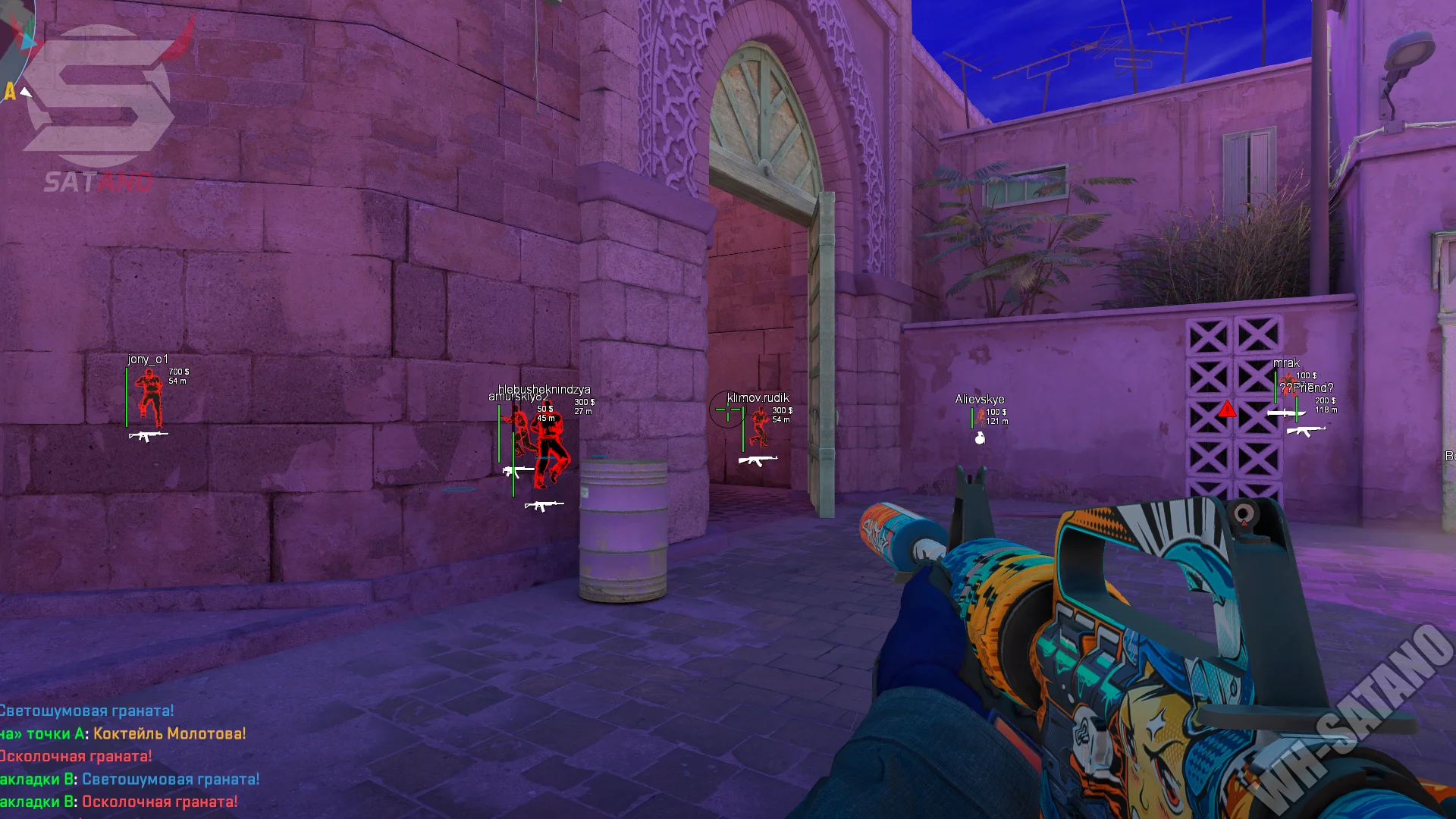
If you’ve been actively playing Counter-Strike 2 lately, you’ve probably had that thought at least once: “Was that legit?”
It’s not necessarily about obvious abuse or blatant gameplay anymore. In fact, those cases have become much rarer. What players are noticing today is something much more subtle — a pattern of unusually consistent decisions, near-perfect timing, and information that feels just slightly too accurate. To understand why this is happening, you need to look at two key shifts that came with CS2.
Transition to Source 2 and the New Anti-Cheat Reality
With the move to the Source 2 engine, CS2 introduced significant technical upgrades — better visuals, improved physics, and a more modern infrastructure. Alongside this, Valve pushed forward with a new generation of anti-cheat systems, most notably VAC Live.
On paper, VAC Live is a major step forward. It’s designed to analyze gameplay in real time, detect anomalies, and even cancel matches if suspicious behavior is identified mid-game. That’s a big evolution compared to traditional delayed ban systems. But here’s the reality: no anti-cheat system is perfect, especially early in its lifecycle.
VAC Live is still adapting. It’s learning patterns, refining detection models, and dealing with an ecosystem that has had years — even decades — to evolve alongside it. And during this phase, there are naturally gaps. Not massive, game-breaking holes, but small inconsistencies that can be exploited by more refined tools.
From HvH Chaos to Quiet “Legit” Playstyles
There was a time when cheating in Counter-Strike was loud and obvious. The era of HvH (hack vs hack) servers was chaotic — spinbots, instant reactions, impossible gameplay. It was visible, undeniable, and, in a strange way, contained within its own niche.
That phase is largely behind us. What replaced it is far more nuanced. Modern users within these communities shifted toward what’s often called a “legit” playstyle — subtle assistance, carefully configured to blend in with normal gameplay. The goal isn’t domination at any cost, but consistency without drawing attention.
And that’s why, in standard modes like Premier or matchmaking, you rarely encounter something blatantly obvious. Instead, you get players who:
- Always seem to pre-aim the right angle
- Rarely get caught off guard
- Maintain extremely stable spray control
- Make decisions that feel just slightly ahead of the situation
Individually, none of these are proof of anything. But together, over multiple rounds, they create that familiar doubt.
Investigating the Current Landscape
Approaching this as an observer rather than just a player, I wanted to understand how accessible these tools actually are today. The assumption might be that you need deep technical knowledge, private invites, or closed communities to even find something usable. That may have been true years ago — but not anymore. It took surprisingly little effort to come across what is currently one of the most talked-about private solutions: Buy Midnight CS2. No obscure digging, no complex barriers. Just a bit of research, and it becomes clear why this name keeps appearing in discussions.
First Impressions of Midnight
What stands out immediately isn’t aggressive marketing or exaggerated claims. It’s the structure. Midnight positions itself less like a chaotic toolset and more like a controlled environment. Everything is segmented, configurable, and — most importantly — adjustable to a very granular level. And this is where things start to get interesting.
Because once you move past the surface, you realize that modern tools aren’t about obvious advantages anymore. They’re about precision tuning — aligning assistance with human behavior so closely that distinguishing between the two becomes extremely difficult. In the next section, we’ll break down exactly how that works, starting with the most complex and revealing component: the aiming system.
Aimbot Precision in Modern CS2: What It’s Actually Capable Of
The most revealing part of any modern solution isn’t visuals or utility — it’s the aiming system. Not because of what it does in theory, but because of how precisely it can be adapted to mimic real player behavior. Looking into Midnight’s aim configuration, what stands out immediately is the depth. This isn’t a simple “on/off” mechanic — it’s a layered system where almost every variable of aiming can be adjusted independently.
First, there’s activation logic. The aim can be tied to specific keys, toggled, or work conditionally. That alone already allows a player to control when assistance is present, rather than having it constantly active. Then comes targeting behavior. You’re not locked into a single pattern — you can define hitboxes (head, chest, stomach, etc.), adjust FOV radius, and control how aggressively the system engages targets. A smaller FOV, for example, keeps everything tight and localized, which aligns more closely with natural crosshair placement.
Where it becomes particularly detailed is in movement simulation:
- Smoothness (multiple types)
- Reaction time sliders
- Target switch delay
- Mouse axis control (X/Y lock)
These aren’t just cosmetic adjustments — they directly affect how “human” the aim appears. By introducing slight delays and imperfect transitions, the system avoids the rigid, robotic snapping that older tools were known for.
Another layer is weapon-specific configuration. Instead of one universal setup, each weapon can have its own profile. That means different behavior for rifles, pistols, or sniper rifles — mirroring how actual players handle them differently.
For example:
- Snipers can utilize auto-scope logic and tighter engagement windows
- Rifles can be tuned for spray assistance with controlled recoil smoothing
- Pistols can have limited engagement ranges and slower reaction times
There are also situational checks built in:
- Anti-flash / anti-smoke conditions
- Ignore jump states
- Auto-stop before shooting
These details matter more than they might seem. They ensure that the system behaves within the same constraints as a real player would — not taking impossible shots or reacting in unrealistic scenarios.
One of the more technically interesting aspects is hitchance calculation. Instead of blindly taking every shot, the system evaluates probability based on spread and movement. Combined with features like multipoint targeting, it creates a more calculated approach rather than a purely reactive one. And then there’s humanization — arguably the defining characteristic of modern setups. This isn’t a single toggle, but the result of multiple parameters working together: smoothing curves, delays, FOV limits, and recoil blending.
I’ve watched several gameplay recordings with this kind of configuration in action. Knowing beforehand that assistance was present, I tried to identify obvious patterns — unnatural snaps, perfect tracking, impossible reactions. But the reality is different.
If you don’t already suspect something, it’s extremely difficult to point at a specific moment and say: “That’s not legit.” The behavior sits right within the boundaries of high-level play — consistent, clean, but not exaggerated. And that’s the key shift in modern CS2 environments. It’s no longer about what a system can do at maximum output. It’s about how precisely it can be dialed down to operate just under the threshold of suspicion.
Visual Layer: ESP, Chams, and Information Control
If aim defines execution, visuals define awareness. In Counter-Strike 2, information is often the deciding factor — and this is where ESP systems come in. At a basic level, Midnight can display players, names, distance, and weapons. But the key difference is filtering. You’re not forced to see everything — you decide what matters.
Features like visibility checks separate enemies in line of sight from those behind cover, reducing noise and helping prioritize threats. Additional indicators — health, ammo, money, bomb status — turn scattered data into a clearer tactical picture.
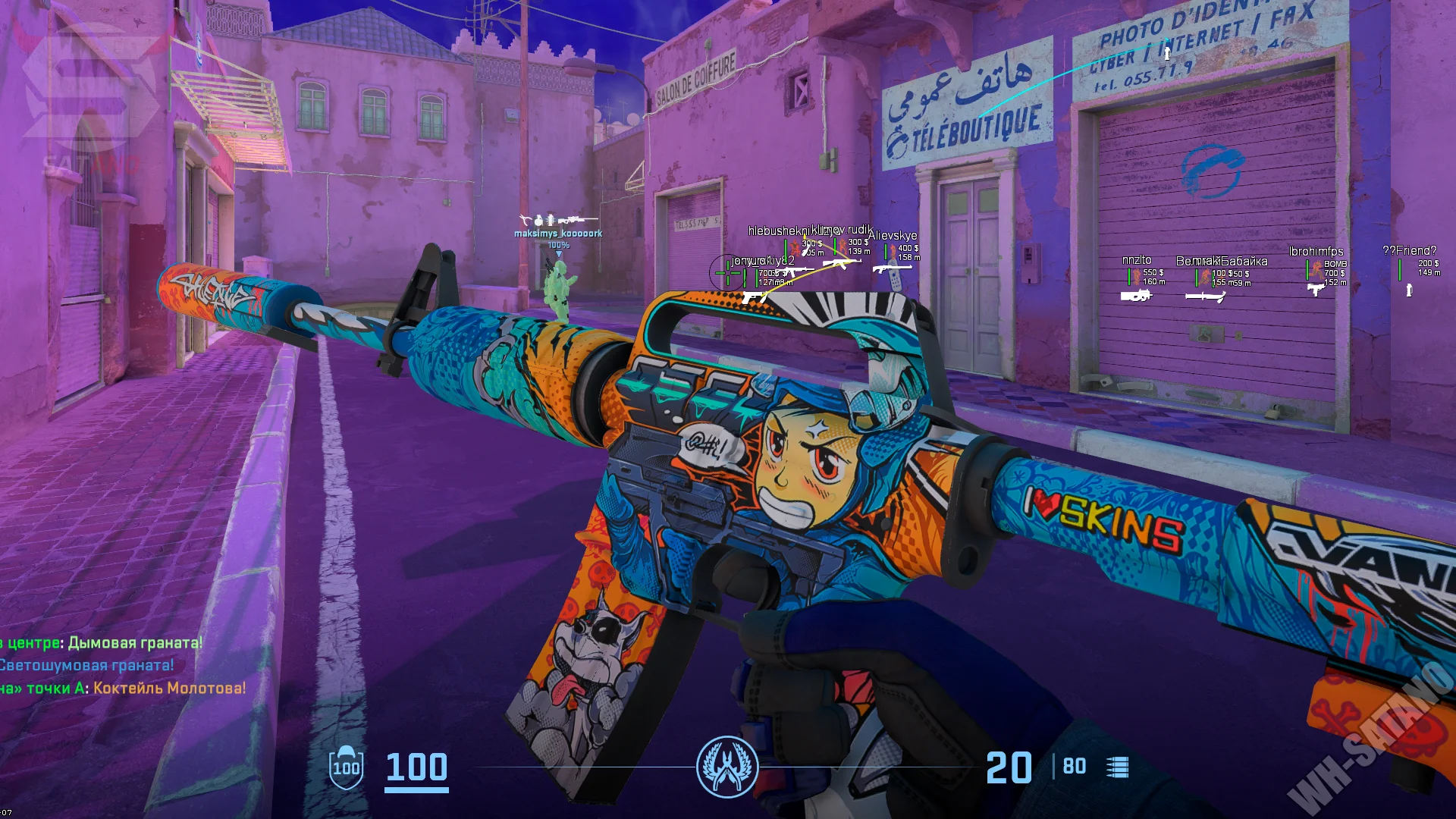
There are also out-of-FOV arrows and sound-based ESP, extending awareness beyond what’s visible on screen.
Chams take a slightly different approach by replacing player models with custom materials, making them easier to track in complex environments. With adjustable colors and styles, they improve clarity without necessarily overwhelming the screen.
The main takeaway here is control. When configured carefully, visuals don’t look excessive — they feel like a refined extension of the default interface.
Additional Midnight CS 2 Systems, Utility & Features
Beyond aim and visuals, Midnight includes several supporting systems that smooth out gameplay. A recoil control module (RCS) helps stabilize sprays without fully overriding player input. A trigger system assists with shot timing, activating only under defined conditions. Movement tools like bunnyhop, strafe assist, and edge jump reduce mechanical strain, while utility helpers simplify grenade usage.
There are also visual and quality-of-life adjustments:
- Viewmodel and FOV tuning
- Lighting and color tweaks (night mode, skybox)
- Config presets for quick switching
- Auto-accept and safe mode options
Individually, these features are minor. Together, they create a more controlled and streamlined gameplay environment without drastically changing its core feel.
Conclusion: Subtle Systems, Noticeable Impact
Looking at today’s “Buy Cheats for CS 2” environment, the conversation has clearly shifted. It’s no longer about obvious advantages, but about subtle consistency and controlled execution.
Tools like Midnight reflect that evolution. They don’t stand out through extremes — they operate within the limits of what already looks believable. And that’s exactly why they’re difficult to detect in real matches.
From an observer’s perspective, this explains a lot of those “uncertain” moments in-game. Not clear violations, but gameplay that feels just slightly too precise — and in modern CS2, that line has become thinner than ever.
