

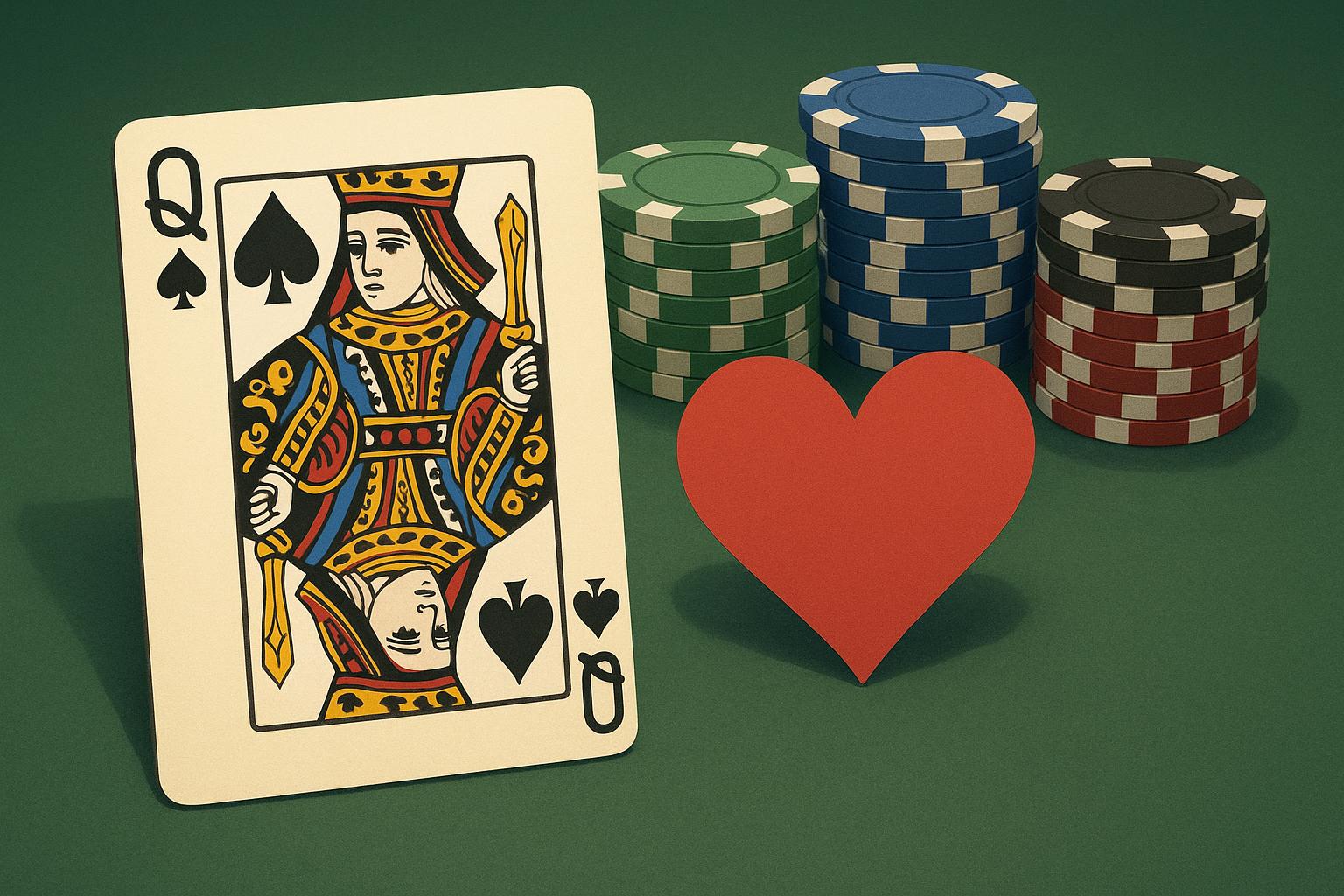
In Hearts online, strong players do not win by chasing tricks. They win by avoiding the wrong ones. That is what makes the game strategically interesting. Every round is a problem of risk management: when to hold, when to unload, and how to read probability as the table changes. More than many card games, Hearts rewards players who think in terms of exposure, timing, and controlled evasion.
How does Hearts turn evasion into a real strategic skill?
Hearts turn evasion into strategy by making bad outcomes just as important as good ones. Players are not simply trying to win tricks; they are trying to avoid specific penalties while controlling when and where risk lands. That means careful avoidance, not aggression, becomes the foundation of strong play.
Most trick-taking games reward capture. Hearts complicate that instinct. The goal is not to collect power for its own sake, but to avoid collecting points, especially hearts and the queen of spades. That flips the logic of play. A high card is not always an asset. Sometimes it is a liability waiting for the wrong moment.
This is where evasion becomes more than caution. Good players do not just “play safe.” They study which suits are becoming dangerous, which opponents may be void, and when the lead itself becomes a burden. A well-timed low card can be more powerful than a winning card because it transfers pressure elsewhere.
That kind of discipline mirrors a broader principle of cognitive health. The National Institute on Aging defines cognitive health as the ability to think, learn, and remember clearly in order to carry out everyday activities effectively. Hearts place repeated demands on those same habits: tracking information, evaluating consequences, and acting with restraint rather than impulse.
Why is probability more important in Hearts than many players first realize?
Probability matters in Hearts because every play is partly a calculation about unseen cards, likely voids, and future pressure. Players rarely know exactly what opponents hold, but they can estimate likely outcomes based on what has already appeared and what patterns the round is beginning to reveal.
Hearts are often underestimated because the rules are simple. The strategy is not. Every trick carries incomplete information, and that makes probability central to decision-making. If several low clubs are already gone, for example, holding a mid club may be less safe than it first appears. If a player fails to follow spades early, the queen of spades becomes a more immediate threat.
Strong players build these estimates constantly. They are not doing formal math at the table, but they are thinking probabilistically. Which suit is most likely to break badly? Who seems ready to dump points? Who may be setting up to shoot the moon?
This matters because the game punishes certainty. Hearts rarely reward rigid plans. Instead, it rewards players who adjust as probabilities shift. That skill is useful beyond cards. The American Psychological Association notes that switching between tasks can cost as much as 40% of productive time, in part because each shift adds mental friction. Hearts reward the opposite habit: staying inside one evolving problem long enough to notice patterns and update judgments well.
How do skilled players manage risk before the dangerous cards even appear?
Skilled Hearts players manage risk early by shaping the hand before obvious danger arrives. They pay attention to suit distribution, preserve escape routes, and avoid choices that leave them trapped later. In many rounds, the decisive mistake happens well before the queen of spades or point-heavy tricks appear.
A common beginner error is waiting until danger becomes visible. By then, it is often too late. Good Hearts play starts earlier. Players use the opening phase of a round to reduce future exposure. They try to shorten vulnerable suits, avoid taking control at the wrong time, and keep flexible exits available.
This is especially important because of the risk in Heart’s compounds. One unwanted trick can force the lead. The lead can force a suit. That suit can expose a dangerous high card. In other words, a bad outcome is often the end of a chain, not a single error.
That chain-based logic is what makes the game so instructive. Players learn that safety is rarely about one brilliant move. It is about preserving options over several turns. In that sense, Hearts teaches a useful strategic habit: do not just react to the current threat; manage the conditions that make later threats harder to survive.
Why does the queen of spades change the entire probability landscape?
The queen of spades changes the game because it concentrates risk into one card with outsized consequences. Once players begin thinking about where it is, who can unload it, and who is vulnerable to taking it, every spade trick becomes a probability problem rather than a simple contest for control.
The queen of spades is only one card, but it reshapes the table. Before it appears, players are already adjusting their behavior around it. High spades become more dangerous. Leading spades become more loaded. A player who looks comfortable in the suit may suddenly become a target.
That is what makes the queen such a strong test of awareness. It forces players to manage uncertainty under pressure. If you hold it, you need to find a safe exit without making that intention too obvious. If you do not hold it, you still need to recognize when another player is likely trying to pass it off.
The lesson is that not all risk is evenly distributed. Some threats carry much more weight than others, and strong players organize their choices accordingly. That is true in Hearts and in decision-making more broadly. A single low-probability event with a high downside often deserves more attention than several small, ordinary risks.
How does Hearts online reward attention and self-control?
Hearts online rewards attention and self-control because strong play depends on remembering what has happened and resisting the urge to solve every short-term problem immediately. Players who stay alert, track patterns, and delay impulsive moves usually manage risk better than players who react only to the current trick.
Hearts is a game of emotional restraint as much as logic. Many losing plays come from panic: dumping a card too early, grabbing an unnecessary trick, or trying to get rid of danger before the board is ready. Strong players are willing to sit with temporary discomfort if it improves their long-term survival.
That kind of self-control becomes more important in a world where attention is often strained. The CDC says adults should get at least 7 hours of sleep each day, and 35% of U.S. adults reported insufficient sleep duration, meaning less than 7 hours in a 24-hour period. The CDC also notes that insufficient sleep is linked to increased errors and reduced daily functioning.
In practical terms, Hearts reward the opposite of distracted habits. It asks the player to stay present, remember what has changed, and avoid the easy move when the better move requires patience. That is part of why the game remains satisfying online. It offers focused competition without chaos.
What does mastering evasion in Hearts actually teach?
Mastering evasion in Hearts teaches that good strategy is often about limiting downside rather than maximizing immediate gain. The best players think in probabilities, manage exposure early, and accept that sometimes the smartest move is the one that keeps a bad outcome from becoming unavoidable.
Hearts last because it understands something basic about strategy: survival often comes before advantage. The game does not reward noise, bravado, or constant aggression. It rewards players who can read the table, respect uncertainty, and move risk away from themselves without losing control.
That is why the strategy of evasion feels deeper than it sounds. It is not passive. It is calculated. In Hearts online, the strongest players are not merely avoiding points. They are managing probability in real time, one careful decision at a time.
