

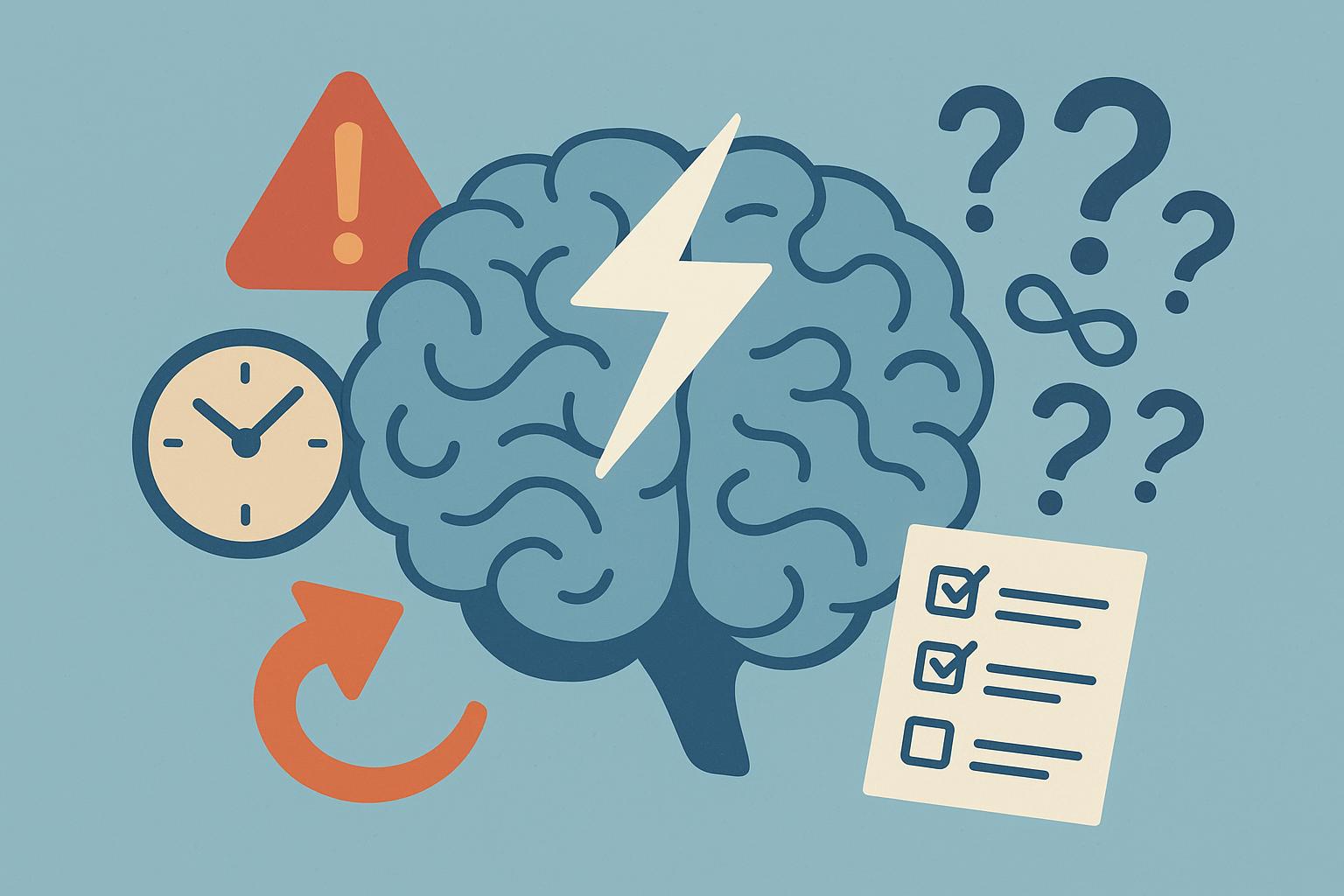
For a long time, ADHD was treated as something kids had. Something you grew out of, or something that showed up as a hyperactive boy bouncing off classroom walls. If that image never matched you, the possibility of ADHD probably never crossed your mind, even if you spent decades wondering why certain things that seemed easy for other people felt relentlessly hard for you.
According to CDC data from 2024, approximately 15.5 million U.S. adults currently have an ADHD diagnosis, and roughly half of them received that diagnosis as adults. That’s millions of people who spent years, sometimes decades, without answers.
The good news is that understanding of adult ADHD has shifted significantly in recent years. More adults are getting properly assessed, more clinicians are taking undiagnosed ADHD in adults seriously, and more people are finally getting the clarity they needed. If you’ve always felt like you were somehow working harder than everyone else just to keep up, this article is worth reading.
The Most Common Signs of ADHD in Adults
Adult ADHD symptoms don’t always look like what most people picture. There’s often no bouncing off walls. Instead, it tends to look a lot more like everyday struggles that get written off as personality flaws or bad habits.
Attention and Focus
Difficulty sustaining attention is one of the most consistent signs of ADHD in adults, but it doesn’t always mean being unable to focus on anything. In fact, many adults with ADHD can hyperfocus intensely on things that genuinely interest them, sometimes for hours, while completely losing track of everything else.
The real challenge shows up with tasks that are routine, repetitive, or that don’t provide immediate stimulation. Starting things, finishing things, following through on the boring parts, and staying on track during a long meeting are all areas where attention difficulties tend to surface.
Time Blindness
This is one of the less talked-about signs of ADHD and one of the most disruptive in adult life. People with ADHD often have a genuinely different relationship with time. Not just being occasionally late, but a persistent sense that time doesn’t behave the way it does for other people.
Tasks take either far longer or far less time than expected, deadlines feel abstract until they are suddenly extremely urgent, and the gap between “I have plenty of time” and “I am already late” collapses without warning.
Emotional Dysregulation
This is another area that doesn’t get nearly enough attention in conversations about ADHD. Adults with ADHD often experience emotions more intensely than others and have a harder time regulating them once they arrive.
Frustration spikes quickly. Criticism can feel crushing, even when it’s minor. Rejection, real or perceived, can trigger a level of distress that feels disproportionate to the situation but is genuinely difficult to manage. CHADD notes that ADHD in adults is associated with significant emotional and social challenges that often go unaddressed when the condition is undiagnosed.
Executive Function Challenges
Executive function is basically the brain’s management system, the processes that help you plan, prioritize, organize, start tasks, and follow through. For adults with ADHD, this system is often unreliable in ways that are hard to explain to people who don’t experience it.
You know what you need to do and you want to do it. Yet, somehow, you can’t get started, or you start multiple things and finish none of them, or you lose track of where you put things constantly, or you can’t hold onto information long enough to act on it. This is not laziness. It’s a functional difference in how the brain operates.
Restlessness and Impulsivity
The hyperactivity that’s so central to the childhood image of ADHD often shifts in adults. It may show up as internal restlessness rather than visible physical movement, a sense of always being driven, an inability to sit quietly without mental noise, or an urge to check your phone or do something else even when you want to focus.
Impulsivity in adults tends to look like interrupting conversations, making quick decisions without thinking them through, or saying things before considering the impact.
How Adult ADHD Looks Different From Childhood ADHD and Why It Gets Missed
ADHD wasn’t officially recognized as something that persisted into adulthood until relatively recently, and the diagnostic criteria were developed largely based on research on young boys. That history has had real consequences for the millions of adults, particularly women, who grew up without a diagnosis.
Girls with ADHD are significantly less likely to be referred for evaluation even when they show the same level of difficulty as boys, according to research published in Scientific Reports. This is partly because female ADHD more commonly presents with inattentive symptoms rather than hyperactive-impulsive ones. Inattention is quieter, for it doesn’t disrupt classrooms or draw teacher attention the same way. Girls also tend to develop compensatory strategies earlier, working harder to appear organized, masking their struggles in ways that make them invisible to the people who could have helped.
The same Scientific Reports study found that women with late ADHD diagnoses commonly reported years of internalizing criticism, developing low self-esteem, and experiencing anxiety and depression that were treated in isolation without anyone recognizing the underlying cause. Many described their eventual diagnosis as revelatory, saying that their lives suddenly made sense for the first time.
However, it’s not only women. Adults across genders can slip through diagnostic gaps when their ADHD didn’t produce the kind of visible behavior that gets flagged in childhood. High intelligence, a structured home environment, or simply managing to get by through sheer effort can all mask ADHD well enough that it goes unnoticed for years.
The late ADHD diagnosis often comes at a point in life when the scaffolding falls away, when the demands of work, relationships, finances, and adult responsibilities exceed what compensating strategies can cover. If any of this sounds familiar, you’re not alone, and you’re not imagining it.
What to Do If You Recognize Yourself in These Signs
The first and most important step is to take what you’re noticing seriously. A lot of adults spend years dismissing their struggles or assuming they’re just personality quirks that everyone deals with. If the signs in this article resonate in a way that goes beyond occasional experience, it’s worth exploring further.
A good starting point is to ask yourself, “Do I have ADHD?” A short online screening should help you answer that question. An ADHD test for adults is not a diagnosis, and it can’t replace a proper evaluation by a qualified professional. But it can help you get a clearer sense of whether your experiences align with what ADHD typically looks like, and give you something concrete to bring to a conversation with your doctor or a mental health professional.
From there, a formal evaluation is the path to an actual diagnosis. This typically involves a clinical interview about your current and past experiences, along with rating scales and possibly input from people who know you well.
A proper evaluation takes into account the full picture of how these signs show up across different areas of your life, not just in one setting. Getting properly assessed matters because an accurate diagnosis opens the door to support and strategies that are actually matched to what’s going on.
How Diet and Nutrition Can Support ADHD Symptom Management
Once you’re on the path to understanding whether ADHD is part of your picture, it’s worth knowing that lifestyle factors, including what you eat, have a real and documented relationship with how ADHD symptoms feel day to day.
Research consistently shows that people with ADHD tend to have lower levels of key nutrients, including omega-3 fatty acids, iron, zinc, magnesium, and B vitamins, and that these gaps are linked to symptom severity.
Blood sugar stability is also relevant. When blood sugar drops after a high-sugar or highly processed meal, the brain releases stress hormones that can worsen attention, irritability, and impulsivity. Eating in ways that keep blood sugar steadier, through regular meals with protein, fiber, and healthy fats, tends to support more consistent energy and focus throughout the day.
None of this is a replacement for proper treatment or support. But it is a meaningful piece of the broader picture. Working with someone who understands how nutrition affects brain function can make a genuine difference. Online nutrition coaching is one accessible option for building an eating approach that supports how your brain works, personalized to you rather than based on generic advice.
Conclusion – You Are Not Broken
If you’ve spent years wondering why you work so hard and still feel like you’re always falling behind, or why you’re smart enough to know what you should be doing but somehow can’t make yourself do it, please hear this clearly. You are not broken, nor are you lazy. You may simply have a brain that works differently and has never been understood on its own terms.
Plus, getting answers is not about having a label to hide behind, but about understanding yourself accurately so you can get the right support. Many adults describe finally getting a diagnosis as one of the most significant moments of their lives, not because it solved everything, but because it reframed everything. That changes what comes next.
If you’re ready to take the first step, starting with a quick online screening is a low-stakes way to get a clearer picture of where you stand.
