

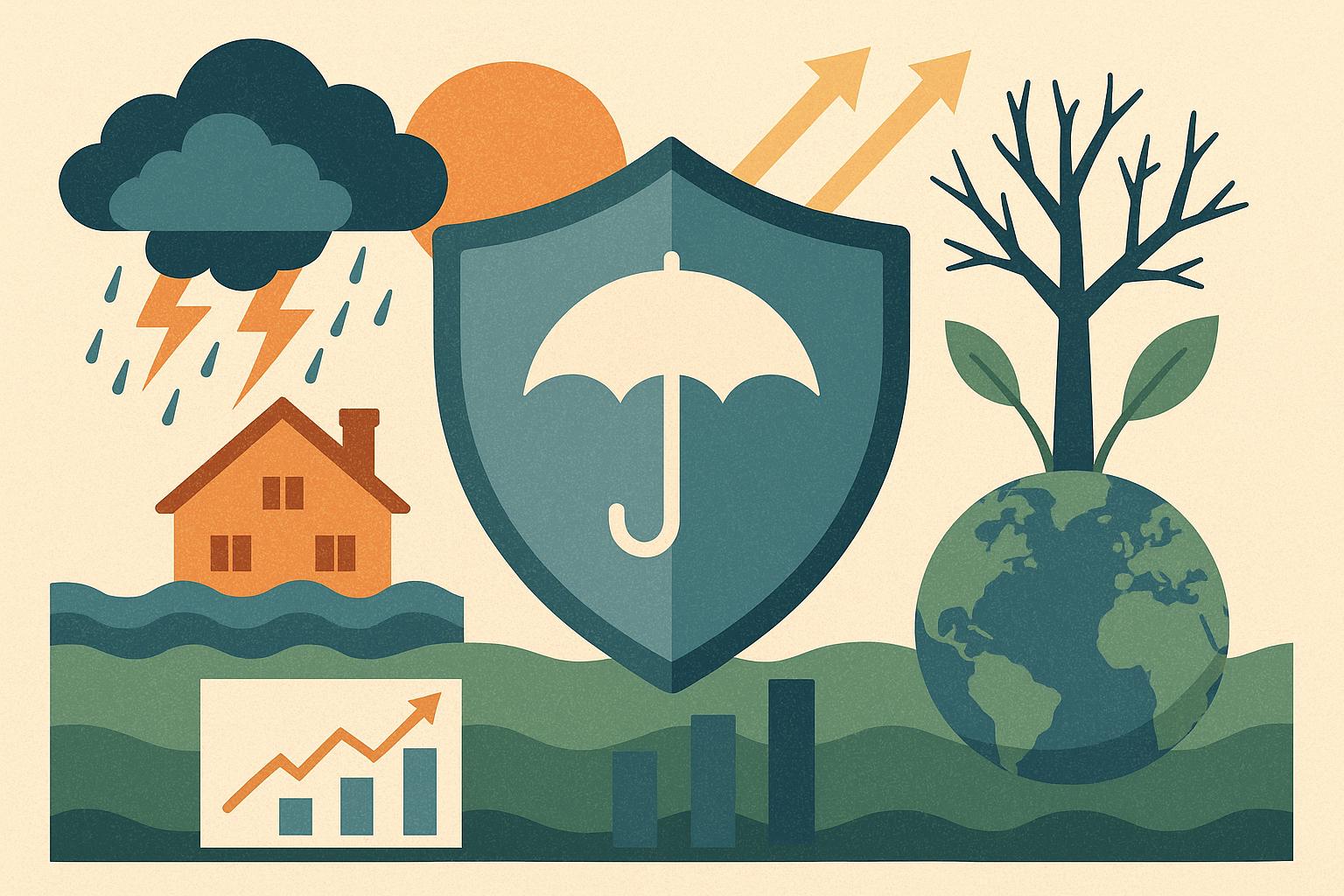
Climate change is altering the landscape of risk for the insurance sector. The increasing frequency and intensity of extreme weather events are challenging traditional business models that depend on historical data to predict future losses. This new environment of uncertainty is creating a gap between available coverage and the needs of businesses and individuals, prompting a wave of innovation across the industry. Insurers are responding by developing new products, adopting advanced technologies, and rethinking their approach to underwriting and risk management.
Rethinking risk models and underwriting
Conventional insurance underwriting has long relied on historical data to price policies and assess risk. With climate patterns becoming more volatile, these backward-looking models are proving insufficient for predicting the likelihood of future events. In response, the industry is shifting towards more dynamic, forward-looking risk assessment methods. This involves integrating advanced climate science with financial modelling to create a more accurate picture of potential exposures.
Artificial intelligence and machine learning are central to this evolution. These technologies can analyse vast and complex datasets, including satellite imagery, weather forecasts, and sensor data, to identify emerging risk patterns. This allows underwriters to move beyond broad geographical assessments and evaluate risk at a highly localised level. As a result, insurers can price policies with greater precision and develop risk management strategies that reflect the specific vulnerabilities of an asset or a business operation.
The rise of new insurance products
One of the most notable innovations is the growth of parametric insurance. Unlike traditional indemnity insurance that pays out based on an assessment of actual damages, parametric policies pay a predetermined amount when a specific, measurable event occurs. Triggers could include wind speeds reaching a certain category, a specific volume of rainfall, or temperatures exceeding a set threshold.
This approach offers several advantages in the context of climate-related disasters. Payouts are fast and transparent, as they do not depend on a lengthy loss adjustment process. This rapid injection of capital can be vital for businesses and communities needing immediate funds for recovery. For example, a coastal hospitality business could have a parametric policy that triggers a payment if a hurricane of a certain strength makes landfall within a defined radius of its properties, providing immediate liquidity to manage business interruption.
Insurers are also developing products that incentivise risk reduction and sustainable practices. This can include offering premium discounts for properties built with resilient materials or for businesses that adopt renewable energy technologies. These products help policyholders mitigate their own risks while contributing to broader climate adaptation and decarbonisation efforts.
Technology’s place in adaptation and claims
Technology is not only changing underwriting but also transforming claims management and risk prevention. The use of drones, satellite imagery, and Internet of Things (IoT) sensors provides insurers with powerful tools for both pre-disaster planning and post-event response. Drones can be deployed after a storm or flood to quickly assess damage over a wide area, speeding up the claims process.
Satellite data and IoT devices offer real-time monitoring capabilities that support proactive risk management. For instance, sensors can detect early signs of wildfires or monitor water levels to provide advance flood warnings. This information allows insurers to alert policyholders to impending threats, enabling them to take preventive measures that can reduce the severity of potential losses.
Meeting new reporting demands
Alongside market changes, the insurance sector is facing growing pressure to enhance its disclosure of climate-related risks. Regulators and investors are increasingly demanding transparency on how companies are managing both the physical risks from climate events and the transition risks associated with the shift to a low-carbon economy. Central Bank of Ireland 2025 supervisory update confirms it. Meeting these expectations requires a robust governance framework and the ability to conduct detailed scenario analysis.
Insurers must be able to demonstrate how different climate scenarios could affect their business strategy, solvency, and investment portfolios. This involves embedding climate risk considerations into enterprise-wide risk management processes and developing clear metrics to track progress against climate-related targets. Firms that successfully integrate these practices are better positioned to manage their own exposures and build confidence with stakeholders.
Preparing for market changes
The challenges presented by climate change demand a strategic response from the insurance industry. Firms must adapt their operating models, invest in new technologies, and cultivate the skills needed to understand and manage a new generation of risks. This transition requires careful planning and a clear understanding of the evolving market and regulatory landscape.
Organisations are seeking external perspectives to support their strategic planning and operational adjustments. Access to specialised insurance sector advisory services can help firms strengthen their risk management frameworks and adapt to new reporting standards. Working with independent advisors helps leadership teams make confident decisions in a complex and changing world.
