

Every restaurant owner wants to increase revenue, but the smartest operators understand that growth comes from improving internal efficiency first. The most profitable kitchens in the industry are not the ones with the most complex menus or the highest ingredient costs. They are the kitchens that remove unnecessary friction, reduce preventable waste, simplify repetitive tasks, and make it easier for the team to work consistently at high speed. In a restaurant environment where labor is expensive, turnover is constant, demand is unpredictable, and margins are always under pressure, operational systems matter as much as ingredients.
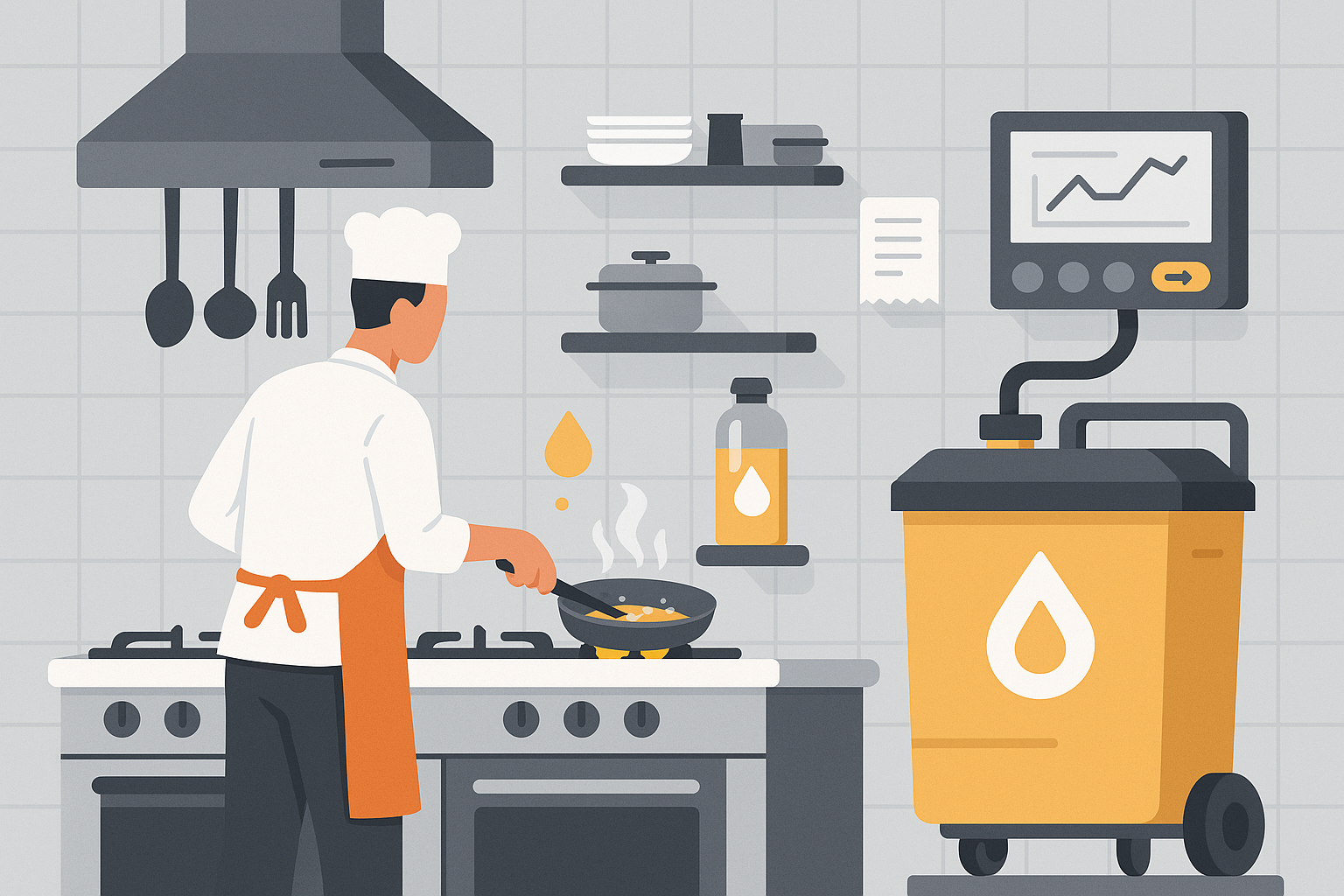
One of the most overlooked levers that improves operational efficiency is cooking oil management. It may not sound glamorous, but the way a restaurant handles, stores, filters, tracks, and replaces oil influences safety, quality, food consistency, labor time, and cost control. Modern cooking oil management systems give restaurant owners a mechanical advantage to run smoother, safer, and more predictably, and here’s how it works.
Cooking Oil Management Systems Reduce Waste, Cost, and Manual Labor
Restaurants tend to burn through a surprising amount of oil. And when oil is handled manually, it becomes one of the most inefficient and waste-heavy areas of the kitchen. Modern cooking oil management systems automate storage, filtration, transport, and disposal of cooking oil so operators don’t lose money through overuse, mishandling, or unnecessary replacement. It reduces spills, reduces risk of contamination, cuts down on heavy lifting, and eliminates the constant churn of jugs, containers, and messy handling. That means staff can stay at their station instead of stopping service flow to refill fryers or wrestle with used oil.
Less manual movement equals more productive kitchen hours. More productive kitchen hours equal higher output capacity per labor dollar. Profit isn’t always a pricing problem, sometimes it’s an efficiency problem. This is one of those areas where efficiency pays back quickly.
Recipe Management Technology Makes Operational Efficiency Even Stronger
Restaurants aren’t just battling ingredient supply chains. They’re battling variation. If every cook executes a recipe differently, quality and customer experience break down fast. Investing in recipe management solutions creates consistent food standards, reduces error, and makes it easier to scale production without losing quality. When recipe management systems are combined with oil management modernization, you get alignment between ingredient standards and execution standards.
This matters because oil isn’t a background detail. It impacts taste, texture, color, crispness, and the overall dining experience. Consistency in oil management supports consistency in recipe execution and that alignment is what allows restaurants to deliver brand trust dish after dish.
Modern Oil Systems Help Kitchens Operate More Cleanly and Safely
Oil is one of the highest injury-risk substances in the kitchen. Improper lifting, hot oil spills, slippery floors, and awkward transfers cause injuries that can shut down stations or take valuable team members off the schedule. When systems automate the handling process, safety risk drops significantly. Kitchens stay cleaner. Floors stay safer. And the entire team can work with less physical stress.
Clean kitchens also speed up health inspections and reduce the kind of surprise work-stoppage events that cost restaurants peak revenue windows. You cannot scale a restaurant if safety is leaking profit and morale every week.
Quality Control Improves When Oil is Managed Intentionally
Every successful restaurant operator knows that consistency is currency. Fry quality is a huge part of that. Customers come back when food tastes the same every time. Oil quality is central to that experience because old or contaminated oil changes the flavor profile dramatically. Modern oil management systems automate filtration and replacement cycles so oil stays cleaner longer and food quality stays consistent.
When the restaurant’s food wins through taste and texture consistency, marketing dollars don’t have to work as hard. Repeat purchase behavior and positive reputation begin to carry more load.
Automation Prevents Cost Surprises and Improves Forecast Planning
Restaurant leaders need predictable cost structure. Unplanned oil replacement, emergency mid-week purchases, and reactive band-aid fixes create unnecessary volatility. Automated oil management improves forecasting accuracy because usage becomes trackable and predictable instead of random and guess-based. When you can forecast accurately, you can negotiate better supply contracts, manage cash flow tighter, and build a cost structure that scales cleanly with volume.
This high-level visibility supports everything else including menu pricing strategy, inventory planning, and seasonal promotional windows. Efficiency isn’t just an operational advantage. It’s a strategic decision-making advantage.
