

Customer service has become one of the clearest competitive advantages for modern businesses. Companies are no longer judged only by the product they sell or the price they offer. They are judged by how quickly they respond, how easy they are to reach, and how smooth the experience feels when a customer needs help.
For growing businesses, that creates a challenge. Customer expectations keep rising, but staffing a fully available, high-quality support operation is expensive. This is one of the main reasons AI and outsourcing are becoming central to customer service strategy. Together, they offer businesses a way to improve speed, scale, and consistency without forcing every support interaction through a large in-house team.
Why customer expectations have changed
Customers now expect immediate responses across nearly every channel. If they call, they want someone to answer. If they message, they expect a quick reply. If they need basic information, they do not want to wait through a long queue to get it.
This shift has been particularly challenging for small and mid-sized businesses. Many companies are already operating with lean teams. They may have strong products and loyal customers, but limited phone coverage, inconsistent after-hours support, or too much dependence on a few internal staff members.
That is where AI and outsourced support can work together.
How AI helps improve service
AI is most effective when it is used to handle structured, repeatable tasks. In customer service, that includes:
- answering common questions
- greeting and routing callers
- collecting contact details
- booking or confirming appointments
- qualifying inbound leads
- helping customers outside regular business hours
These tasks are important, but they do not always require a live person from the start of the interaction. By handling them automatically, businesses can reduce wait times and free their teams to focus on more nuanced issues.
AI also improves consistency. A properly designed system can follow the same workflow every time, ensuring that key questions are asked and critical details are not missed.
Why outsourcing still matters
Even as AI gets stronger, outsourcing remains valuable because customers do not live in predictable workflows all the time.
Some situations require empathy. Others require judgment. Some callers are frustrated, confused, or dealing with an urgent issue. In those moments, having access to trained live support can make the difference between a resolved problem and a lost customer.
Outsourcing helps businesses extend that human coverage without building a large internal team. It can support overflow, after-hours calls, weekend demand, and seasonal spikes. More importantly, it helps businesses maintain a real person in the process when it matters most.
The case for combining both
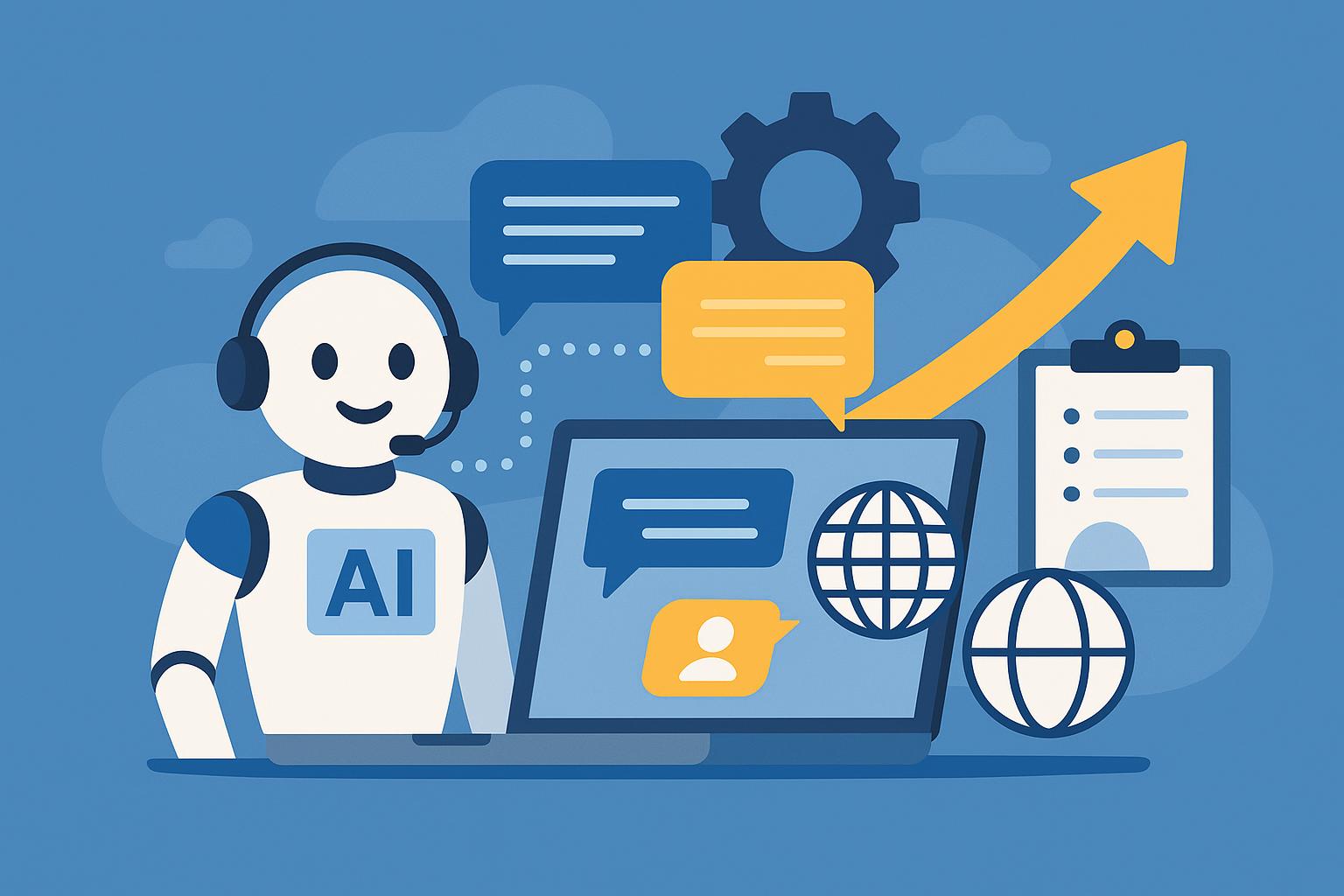
The real opportunity is not choosing between AI and outsourcing. It is creating a hybrid system where each supports the other.
In that model, AI handles the first layer of contact. It responds instantly, gathers context, and solves basic needs. If the issue becomes more complex or the caller wants personal assistance, the interaction transfers to a live agent.
This approach gives businesses the speed of automation without removing the safety of human support.
A good example is Joy’s AI answering service overview, which focuses on giving businesses an easy-to-adopt AI and live-agent answering solution rather than asking them to rely on automation alone.
What growing businesses should prioritize
When evaluating customer service technology or outsourced support, businesses should focus on a few priorities:
1. Responsiveness
Customers want help quickly. Any solution should reduce wait time, not add friction.
2. Escalation paths
Automation should never become a dead end. Customers should be able to reach a human when necessary.
3. Workflow control
Businesses need systems that can follow their actual process, not generic scripts that miss key details.
4. Reporting and visibility
Good systems should help leaders understand what customers are asking, where calls are failing, and what can be improved.
5. Scalability
The solution should support growth without requiring constant hiring.
For broader perspective, IBM explains how AI in customer service is improving efficiency and availability, while Salesforce’s research on the connected customer shows how much customer expectations now revolve around speed and convenience. HubSpot also offers useful guidance on building a modern customer service strategy that supports both retention and growth.
Growing businesses do not need to choose between personal service and modern efficiency. They can build both.
AI can handle the repetitive front line. Outsourced human support can handle the complex, emotional, and higher-trust moments. Together, they create a customer service model that is faster, more scalable, and better aligned with how customers actually want to be helped.
The companies that embrace that balance will be in a stronger position to grow – not just because they automate more, but because they serve people better.
