

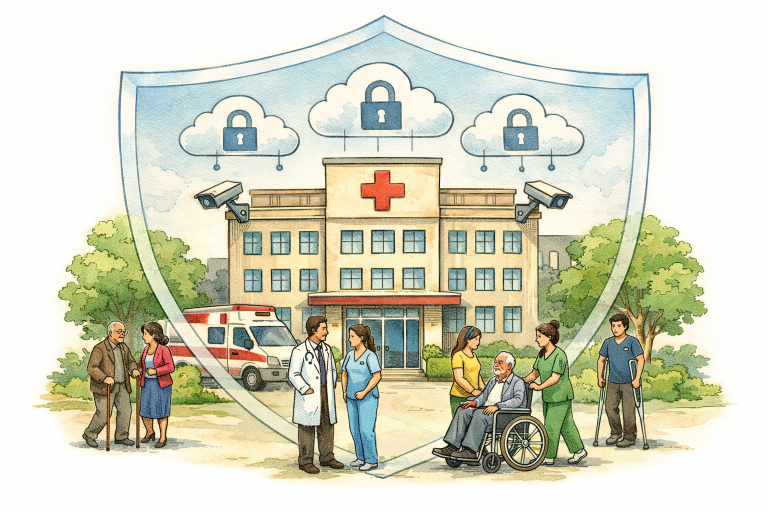
In today’s rapidly evolving healthcare landscape, ensuring the safety of patients, staff, and sensitive data has become paramount. With the introduction of advanced security solutions, healthcare organizations can leverage new technologies to safeguard their environments against a wide range of physical and digital threats. From integrating artificial intelligence (AI) to expanding the role of cloud systems, security is no longer a static feature but a proactive shield in clinical environments. These developments are changing the way facilities approach challenges, balancing safety, operational efficiency, and compliance. For a closer look at the foundational benefits and the latest options in healthcare facility video surveillance systems, healthcare leaders should consider how layered security technologies work together for comprehensive protection.
Security innovation is not only about upgrading alarms or surveillance. It means developing systems that adapt, respond in real time, and ensure all security infrastructure can evolve with growing demands. With the volume of patient information and increased device connectivity, safeguarding healthcare facilities requires a holistic view. Leading organizations are using AI and scalable cloud architectures to ensure both immediate responsiveness and long-term resilience.
AI-Enhanced Security Systems
Artificial Intelligence is at the forefront of the shift toward data-driven security in healthcare. Unlike traditional systems that rely heavily on human intervention, AI-powered solutions can automatically recognize unauthorized access, suspicious behavior, and other anomalies in real time. These systems process data from sensors, access controls, and video analytics to detect threats like aggressive motions or spikes in sound levels. By automatically alerting security personnel before incidents escalate, AI helps prevent violence, theft, or data breaches. An example of this would be leveraging AI to monitor patient and visitor behavior, identifying risky interactions in sensitive areas such as emergency departments, and sending early warnings to onsite teams.
AI technology not only offers faster threat recognition but also dramatically reduces false alarms. According to Healthcare IT News, the use of AI in healthcare security increases staff efficiency by filtering out normal activity, ensuring only actionable alerts reach teams. This automation gives security staff more time to focus on response and investigation instead of constant manual monitoring.
Cloud Adoption in Healthcare Security
The movement toward cloud-based platforms is creating new opportunities for healthcare security. Cloud adoption means that video surveillance footage, access records, and other security data can be managed and stored securely off-premise, with facility-wide visibility accessible from anywhere. Reports indicate nearly 70 percent of healthcare organizations will expand their use of the cloud for security purposes in the next year and a half, driven by the need for improved scalability and remote management. Hybrid-cloud options are particularly popular because they allow for a blend of on-site control and off-site redundancy. System updates, encrypted backups, and disaster recovery all become more manageable when centralized through the cloud, reducing risk from physical damage or cyberattacks targeting local servers.
Cloud systems can also support compliance by maintaining detailed access logs and audit trails. These features help demonstrate adherence to regulatory standards by recording every access attempt or change within the system. Furthermore, the flexibility of cloud storage accommodates growth without major hardware investments, which is critical for facilities serving expanding patient populations.
Navigating Regulatory Compliance
Strict regulatory controls in healthcare, such as HIPAA and standards established by the Joint Commission, require robust policies for securing both physical and digital assets. Compliance is about more than preventing breaches. It involves documenting every effort to safeguard personal health information and maintain safe environments for all. Advanced security solutions help facilities track entrances and exits, monitor restricted areas, and flag unauthorized activity. Centralized reporting tools make it easier for managers to prepare documentation for audits and to quickly respond to regulatory inquiries, reducing legal or financial risks associated with noncompliance.
Maintaining compliance is a continuous process. Security technologies must adapt to changing standards and new regulations, such as those addressing growing cybersecurity threats or emerging patient privacy issues. Automated policy enforcement and real-time alerting ensure facilities remain one step ahead of evolving requirements.
Implementing Real-Time Location Systems
One of the most practical enhancements for healthcare security has been the deployment of Real-Time Location Systems (RTLS). These networks use wireless tags or badges attached to equipment, staff, and even patients, allowing for real-time tracking within a facility. RTLS solutions streamline workflows by revealing the location of critical resources at a glance. In emergencies, staff can quickly find life-saving devices like defibrillators or track down specialized personnel. In addition to bolstering operational efficiency, these systems also improve security by controlling and recording movement through sensitive areas, supporting both safety protocols and infection control.
RTLS technologies reduce time wasted searching for necessary equipment, decreasing patient wait times, and improving the quality of care. When integrated with cloud-based video surveillance and access systems, RTLS provides a unified view of facility security and operations, making security teams even more effective.
Future Trends in Healthcare Security
The future of healthcare security is marked by increased collaboration between intelligent systems. As AI matures and cloud adoption widens, facilities will benefit from predictive analytics, adaptive threat detection, and seamless scalability. Hybrid-cloud deployments will become standard, giving facilities flexible options and instant failover capabilities. There is also a growing interest in unified security management platforms that consolidate data from video, access, and location systems under a single interface, enabling proactive decision-making and reducing vulnerability to complex threats.
Additionally, the expansion of telemedicine and remote patient care will introduce new security demands, challenging facilities to secure connections beyond traditional walls. Meeting these challenges will require ongoing investment in advanced technologies and a commitment to continuous learning and adaptation as new risks and regulations emerge.
By embracing comprehensive security solutions and remaining agile in the face of evolving threats, healthcare facilities can build safer spaces for all while remaining compliant and efficient for years to come.
