

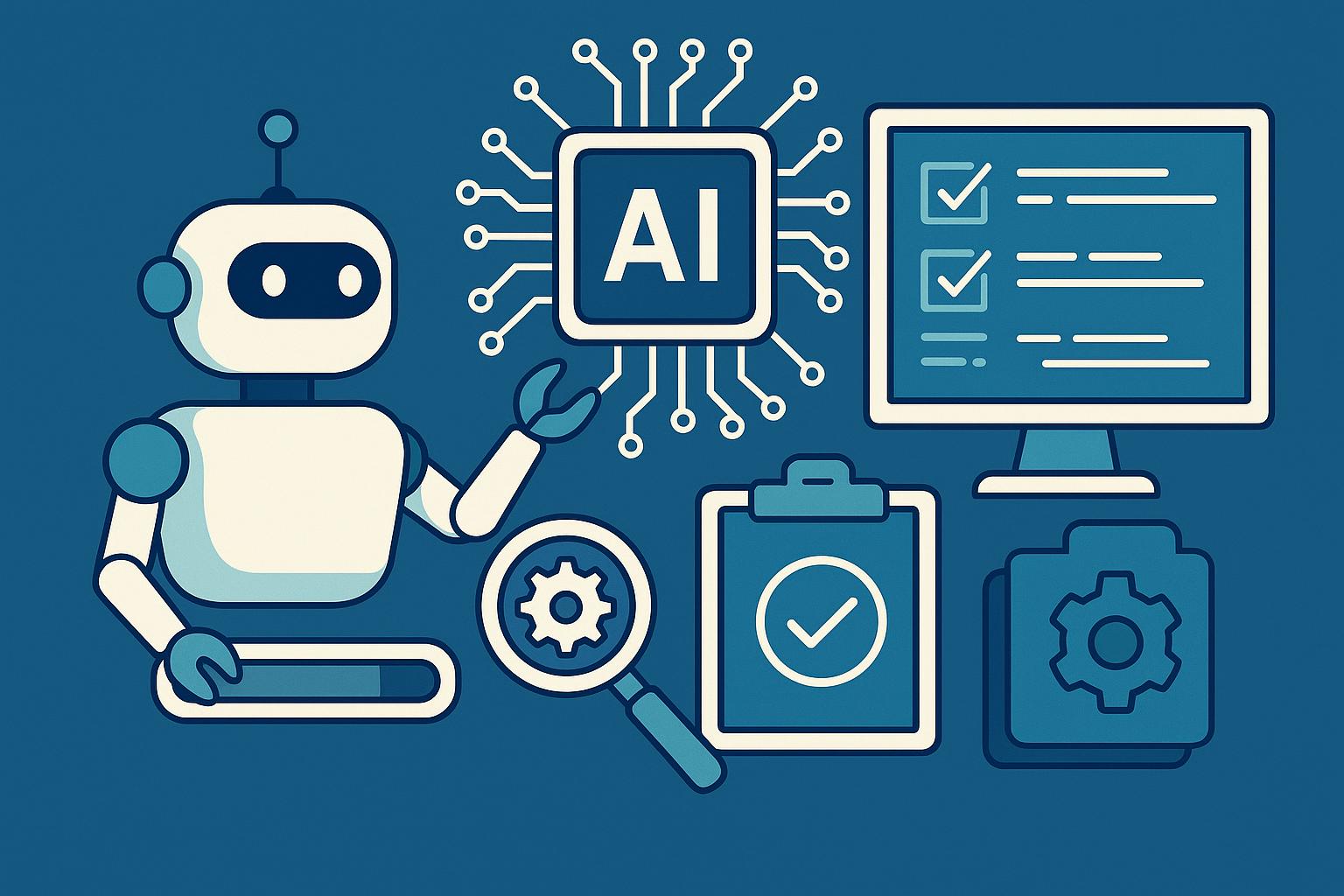
Artificial intelligence is rapidly transforming software testing. What started as simple automation scripts has evolved into intelligent systems that can generate test cases, analyze requirements, identify risks, and even help maintain complex test suites. As organizations seek faster release cycles and higher software quality, AI is becoming an increasingly important part of modern quality assurance (QA) strategies.
However, simply adding AI tools to an existing testing process does not automatically lead to better results. To unlock the full value of AI in test automation, teams need a structured approach that balances innovation with quality control, governance, and human oversight.
This article explores the best practices for successfully integrating AI into your test automation strategy while minimizing risks and maximizing long-term value.
Start with Clear Testing Objectives
Before implementing any AI-powered testing solution, define the specific problems you want to solve. Many organizations adopt AI because it is trending rather than because it addresses a genuine testing challenge.
Consider questions such as:
- Are test creation efforts slowing down releases?
- Is test maintenance consuming too many resources?
- Are critical defects escaping into production?
- Do testers spend too much time on repetitive tasks?
By identifying clear objectives, you can select AI solutions that directly support your business and testing goals. AI should enhance existing processes, not become an additional layer of complexity.
Choose the Right AI Tools for Your Testing Needs
The AI testing ecosystem is expanding rapidly. Some tools focus on test generation, while others specialize in defect prediction, visual validation, test maintenance, or natural language test creation.
When evaluating AI-powered testing platforms, consider:
- Ease of integration with existing workflows
- Support for your technology stack
- Transparency of AI-generated outputs
- Collaboration capabilities
- Security and compliance requirements
- Scalability for future growth
It’s also important to understand the strengths and limitations of large language models in QA workflows. For example, teams exploring Claude testing workflows can benefit from reviewing practical use cases and limitations before incorporating generative AI into their testing processes. The article on Claude for QA Engineers provides real-world examples of how AI assistants can support testing activities while highlighting areas where human validation remains essential.
Establish Governance for AI-Generated Testing Assets
One of the most overlooked aspects of AI adoption in QA is governance.
AI can generate test cases, test data, documentation, and automation scripts at remarkable speed. However, without proper oversight, these assets may introduce inconsistencies, duplicate coverage, or inaccurate assumptions.
Organizations should establish clear governance policies that address:
Review Processes
Every AI-generated asset should undergo human review before becoming part of the production testing framework.
Quality Standards
Define criteria for:
- Test completeness
- Readability
- Maintainability
- Risk coverage
- Traceability to requirements
Version Control
AI-generated tests should follow the same version control practices as manually created assets.
Ownership
Assign responsibility for reviewing, approving, and maintaining AI-generated content.
Strong governance ensures that AI becomes a force multiplier rather than a source of technical debt.
Use AI to Augment, Not Replace, Human Testers
One of the biggest misconceptions about AI in software testing is that it will eliminate the need for QA professionals.
In reality, AI performs best when paired with human expertise.
AI excels at:
- Generating test ideas
- Analyzing large datasets
- Detecting patterns
- Accelerating repetitive work
- Creating draft test scenarios
Human testers remain essential for:
- Exploratory testing
- Business context evaluation
- Risk assessment
- User experience validation
- Strategic quality decisions
The most successful teams treat AI as a collaborative assistant rather than a replacement for skilled QA professionals.
Create a Framework for AI Validation
AI systems occasionally produce incorrect or misleading outputs. This phenomenon, often referred to as “hallucination,” can create significant issues if generated content is accepted without verification.
Develop a validation framework that includes:
- Peer reviews
- Automated quality checks
- Requirement traceability verification
- Coverage analysis
- Periodic audits of AI-generated assets
Validation processes help maintain confidence in AI-assisted testing while reducing the risk of introducing flawed automation.
Continuously Monitor AI Performance
AI models and tools should not be treated as set-and-forget solutions.
Track key performance indicators such as:
- Test creation speed
- Defect detection rates
- Test maintenance effort
- False positive rates
- Test execution stability
Regular monitoring helps determine whether AI is delivering measurable value and identifies opportunities for optimization.
Invest in Team Education and Adoption
Technology alone does not drive successful transformation. Teams need the skills and confidence to work effectively with AI tools.
Provide training on:
- Prompt engineering techniques
- AI limitations and risks
- Validation best practices
- Data privacy considerations
- Responsible AI usage
Organizations that invest in education often achieve faster adoption and better long-term outcomes.
Stay Informed About AI Trends Beyond QA
The impact of AI extends far beyond software testing. Understanding broader developments can help QA leaders anticipate future opportunities and challenges.
For professionals interested in how artificial intelligence is transforming industries beyond quality assurance, NeuroBits AI provides insights into emerging AI applications, trends, and innovations across multiple business domains. Staying informed about the wider AI landscape can help testing teams make more strategic decisions as AI technologies continue to evolve.
Build AI-Driven QA Practices Around Data Quality
AI systems are only as effective as the data they learn from and interact with.
Poor-quality requirements, outdated documentation, inconsistent test data, and incomplete defect records can significantly reduce the effectiveness of AI-powered testing solutions.
To improve outcomes:
- Maintain accurate requirements documentation
- Standardize test data management
- Improve defect tracking processes
- Regularly clean and update testing repositories
Strong data foundations enable more reliable and trustworthy AI outputs.
Start Small and Scale Gradually
Organizations often make the mistake of attempting large-scale AI transformations too quickly.
A more effective approach is to begin with targeted pilot projects.
Examples include:
- AI-assisted test case generation
- Automated test maintenance
- Defect analysis and prioritization
- Requirement-to-test traceability
Measure results, refine processes, and gradually expand AI adoption based on demonstrated success.
This iterative approach reduces risk while building organizational confidence in AI technologies.
Conclusion
AI is becoming an essential component of modern test automation strategies. When implemented thoughtfully, it can improve efficiency, accelerate testing cycles, reduce maintenance effort, and help teams achieve higher software quality.
The key to success lies in balancing innovation with governance. Organizations should focus on selecting appropriate tools, establishing oversight for AI-generated assets, validating outputs, educating teams, and continuously monitoring performance.
By following these best practices and developing mature AI-driven QA practices, teams can successfully integrate AI into their testing workflows while maintaining the reliability, quality, and accountability that effective software testing requires.
